
Life OS
A calm, self-hosted home for everything in one person's life: notes, tasks, routines, projects, people and reading. A quiet personal operating system, now opening to a few invited testers.
At a glance
- Capture never waits
- One way to do a thing
- Onboarding as part of the product
The question
Most productivity tools ask you to build your own system first. What if one opinionated, calm place held it all, and the only thing you had to do was put things into it?
What I built
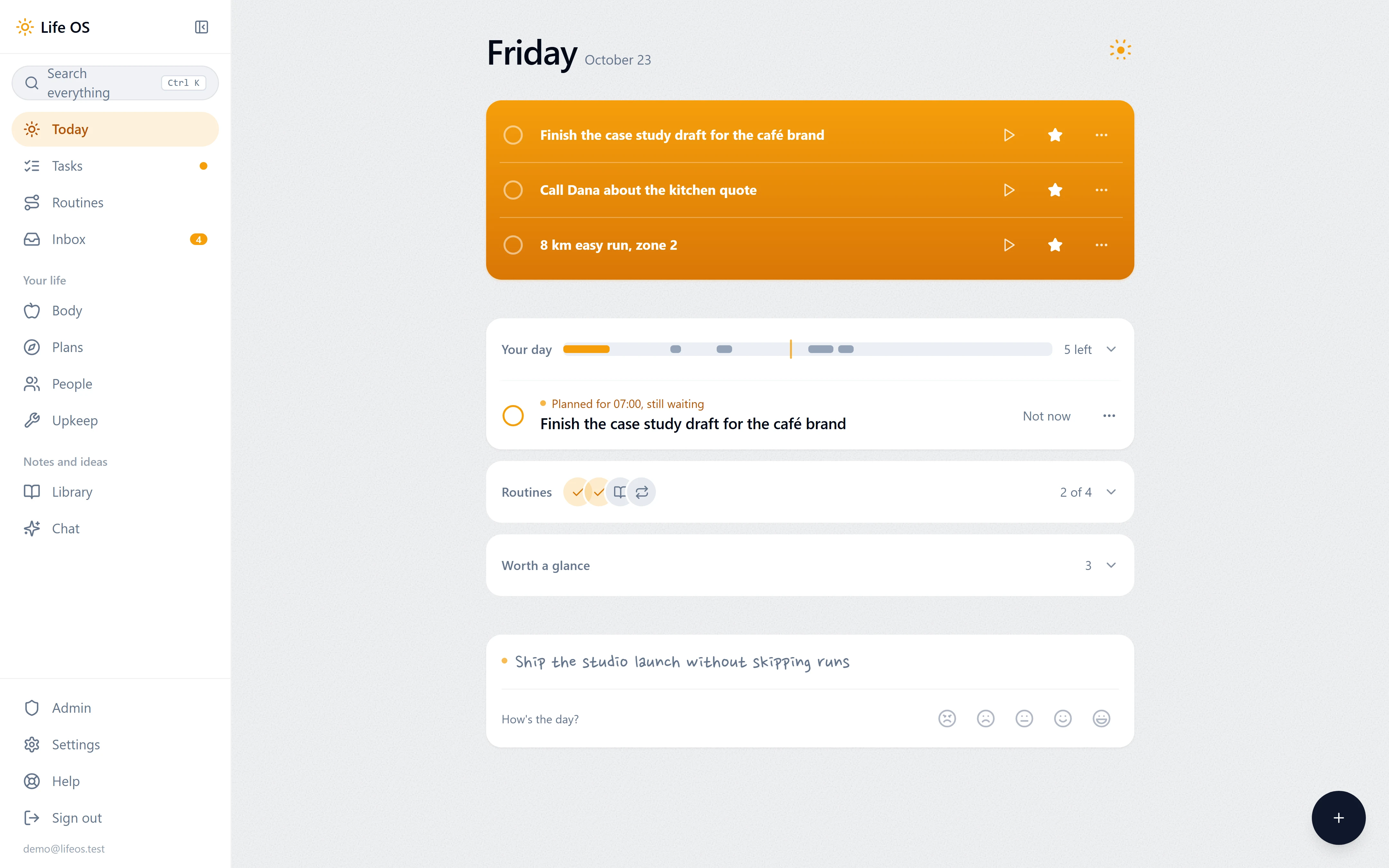
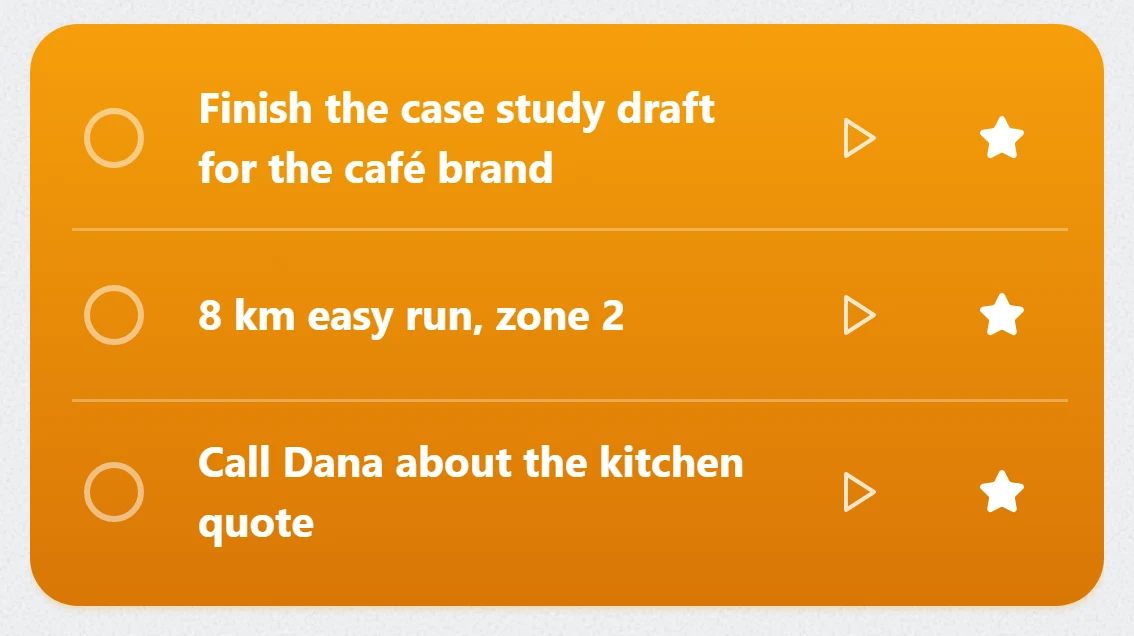
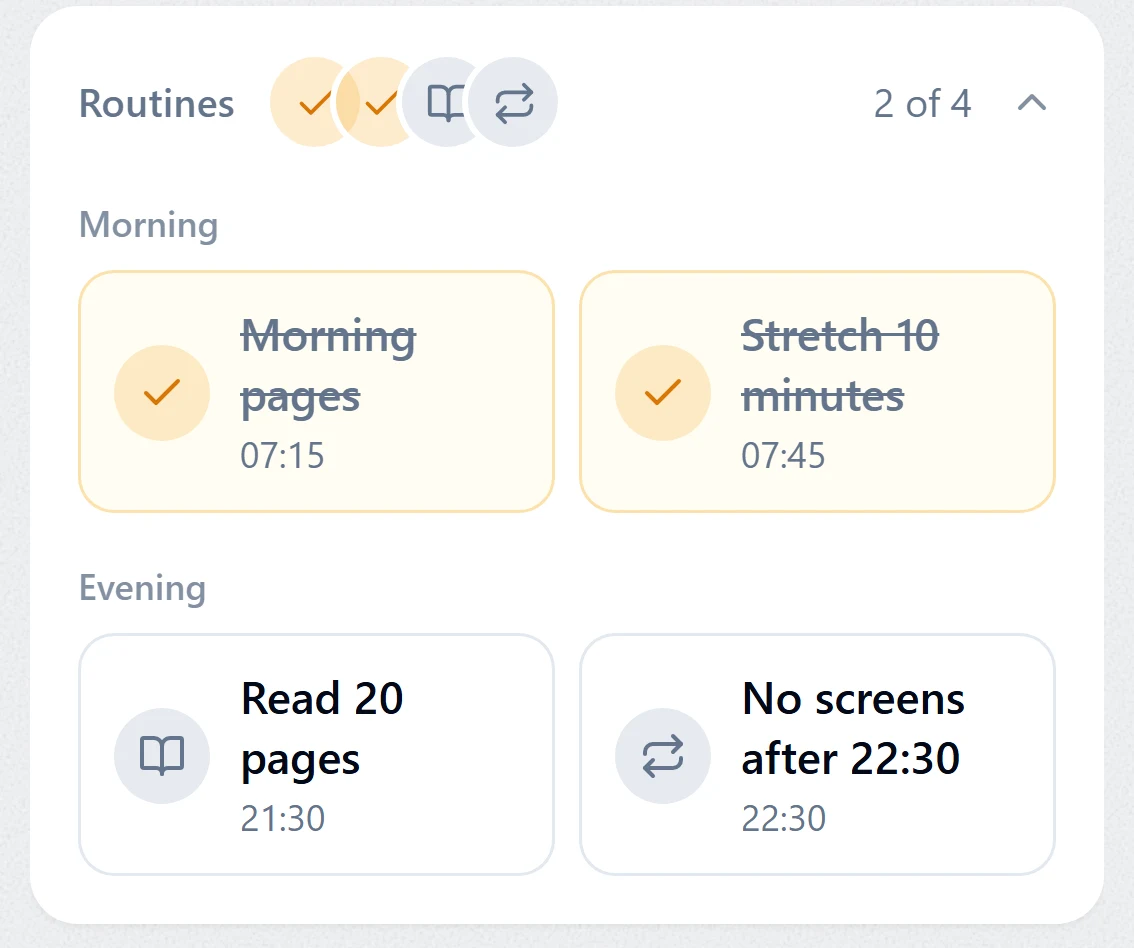
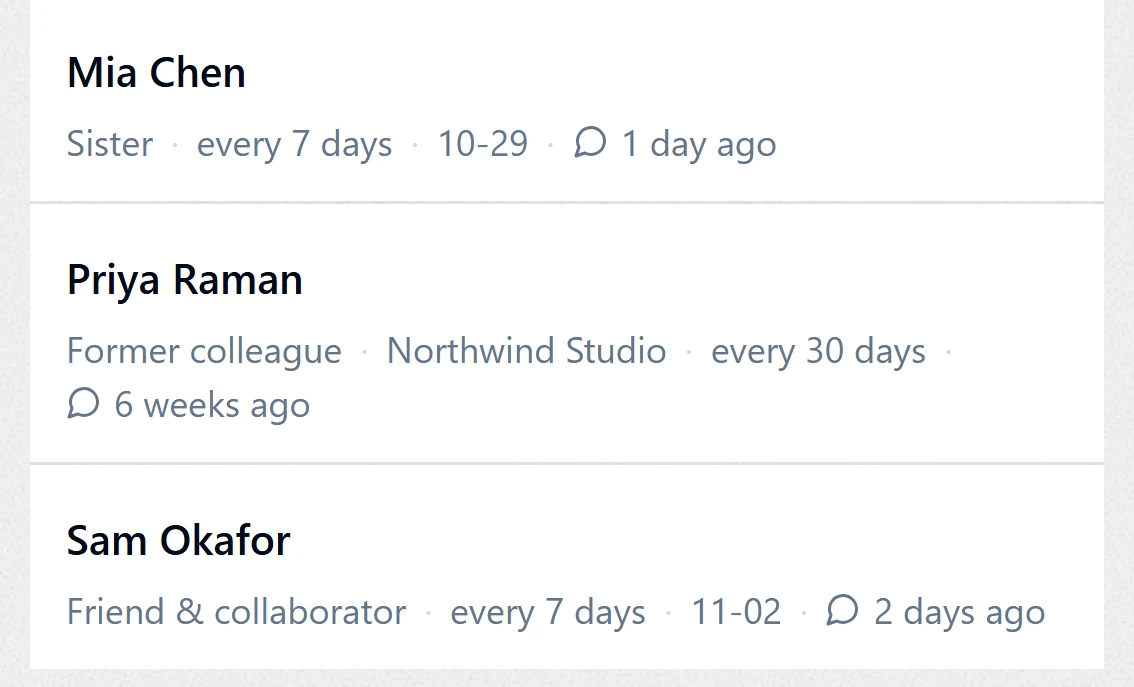
Quick capture of text, voice or a photo, sorted afterwards with AI help. Tasks with a daily top three, routines with gentle streaks, projects and retainers, people with reminders to reconnect, a library that resurfaces what you saved, and a Today view that pulls it together with your calendar.
It runs on my own server and installs on a phone like a native app, because most of its use happens in between moments: a thought on the way somewhere, a routine checked off, a glance at the day.
Inside
How it looks in use.
- Role
- Sole designer, developer and owner
- Built with
- Next.js, Postgres, an AI model for sorting notes, my own server
- Runs
- As an installable phone app and on desktop
- Status
- In beta testing, invite only
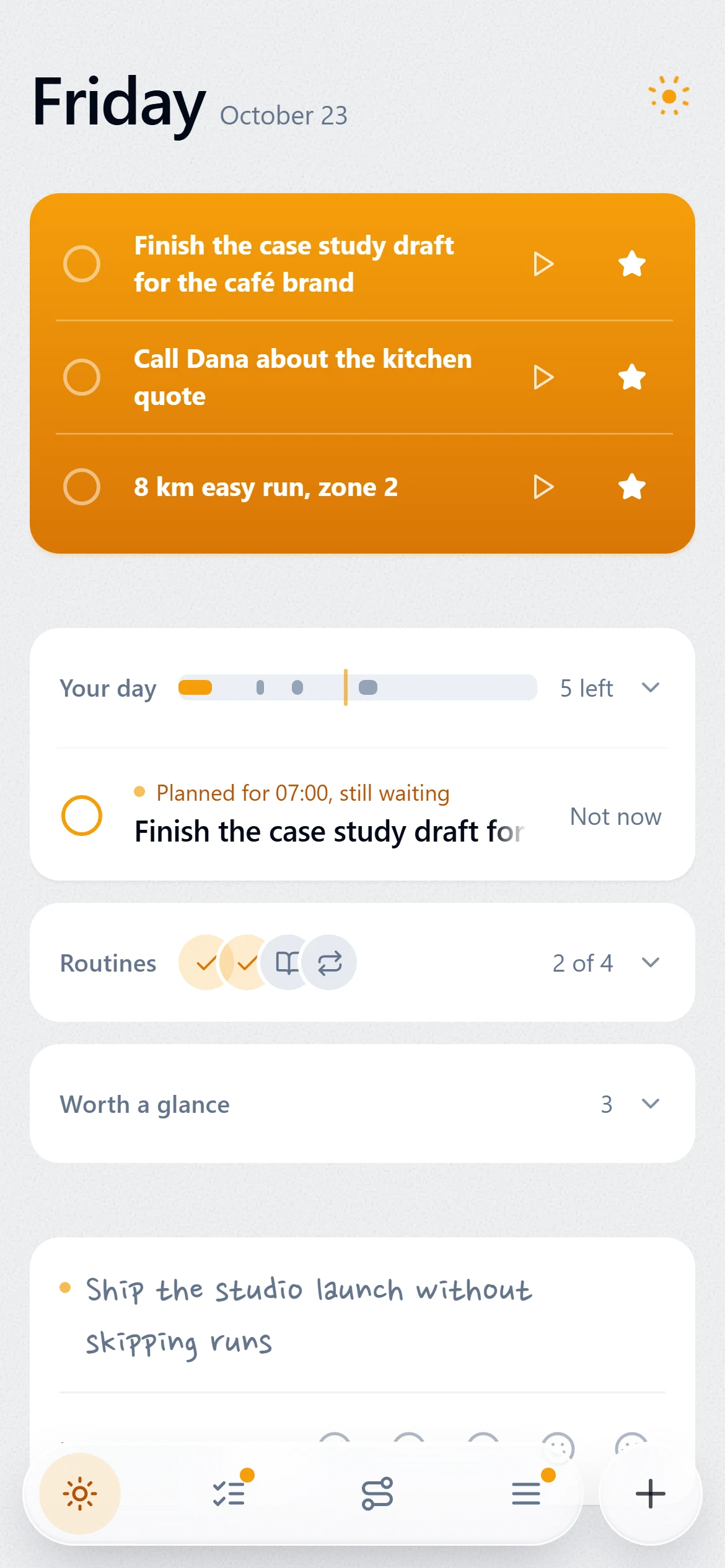
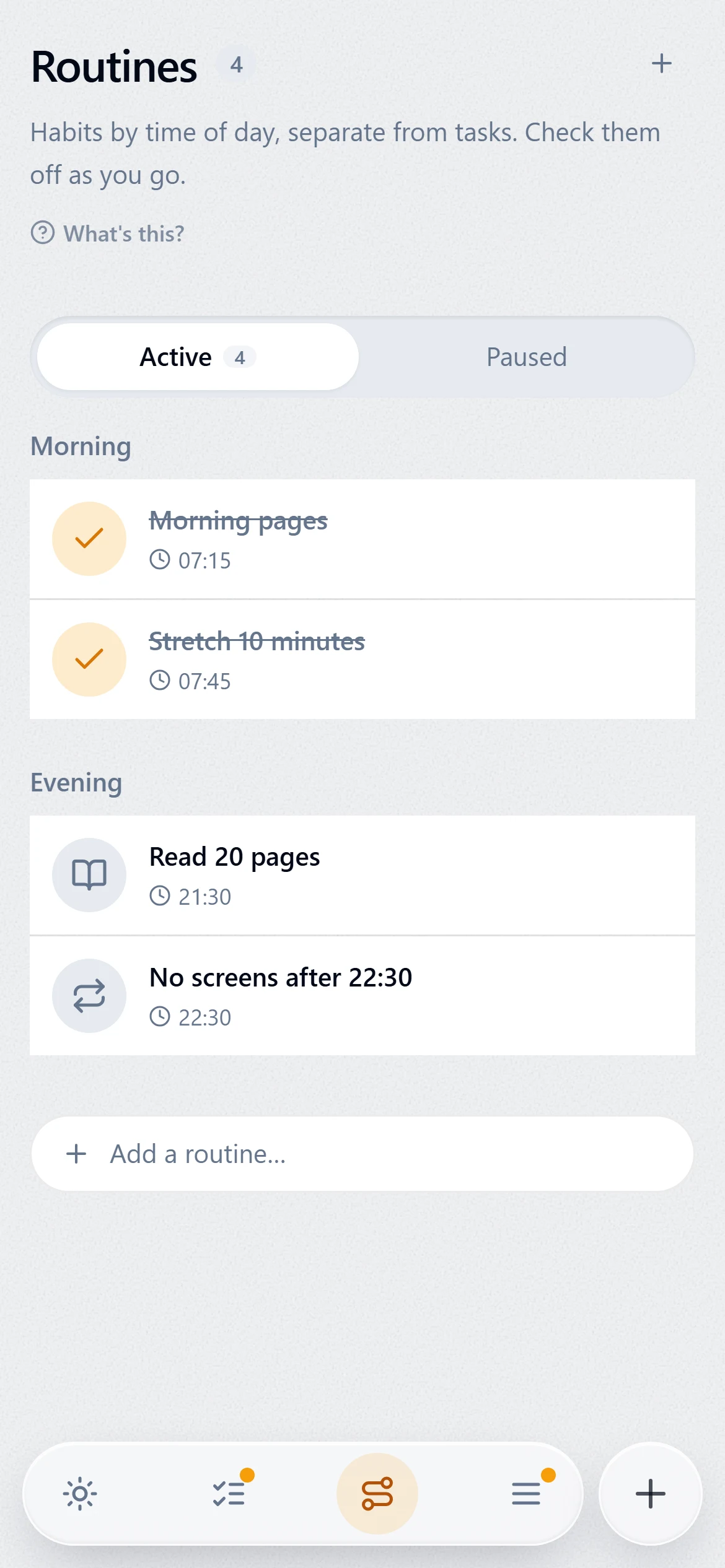
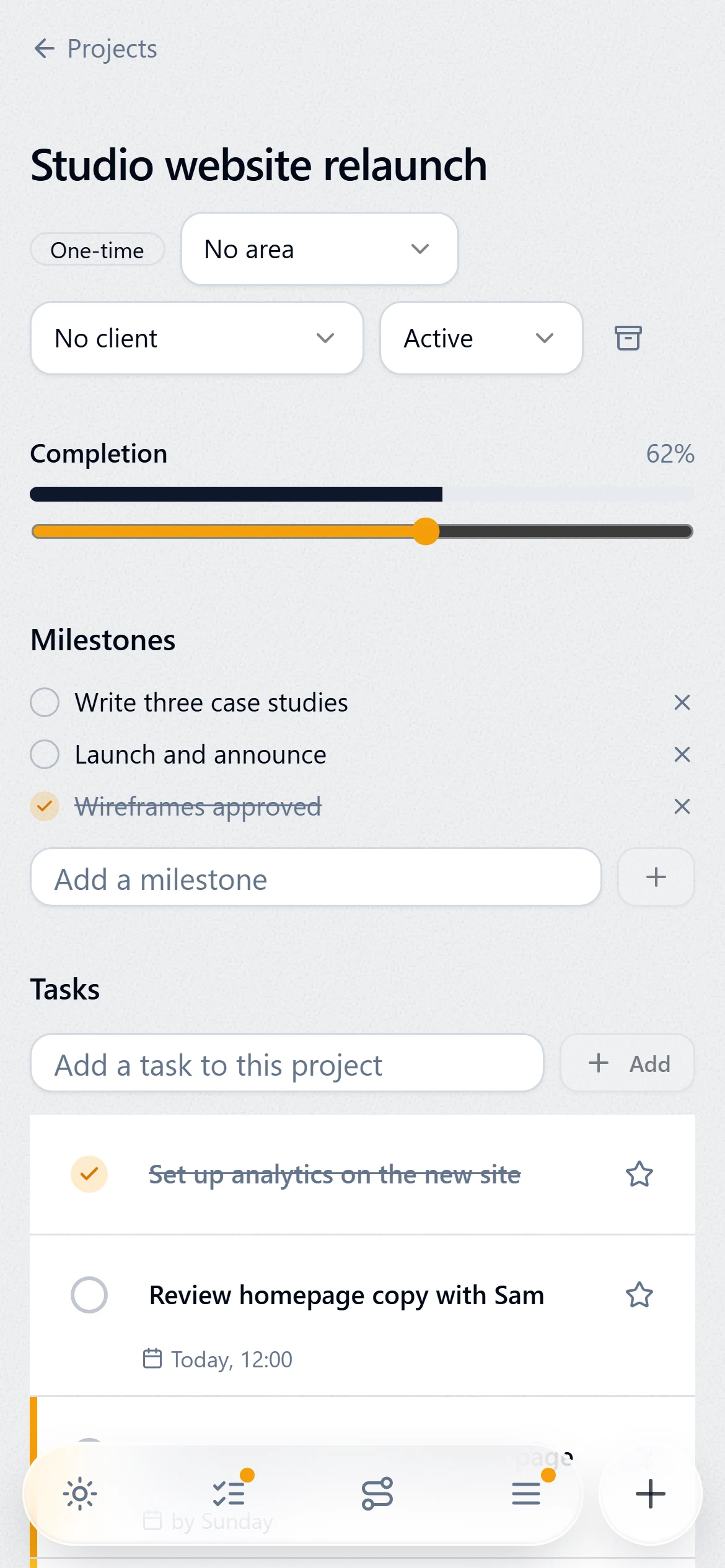
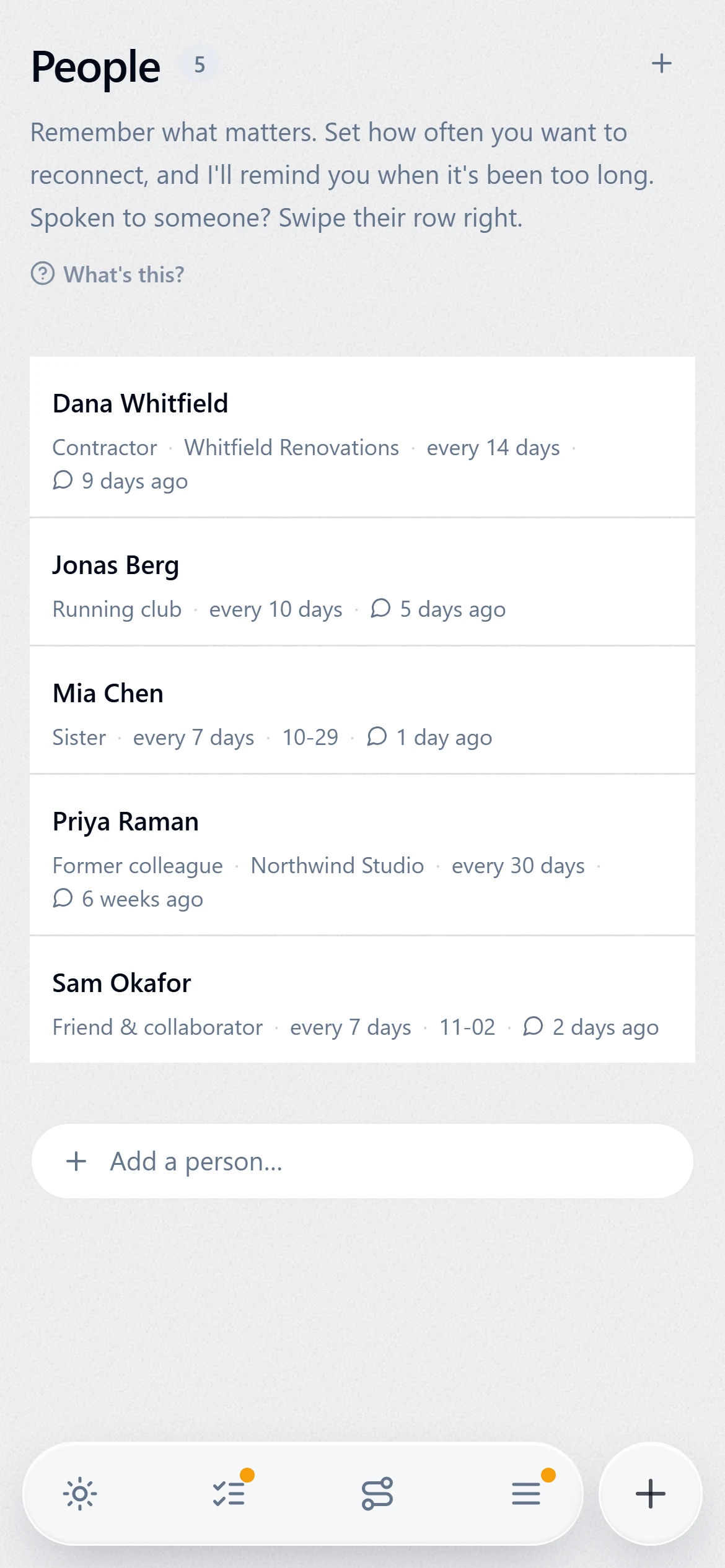
Up close
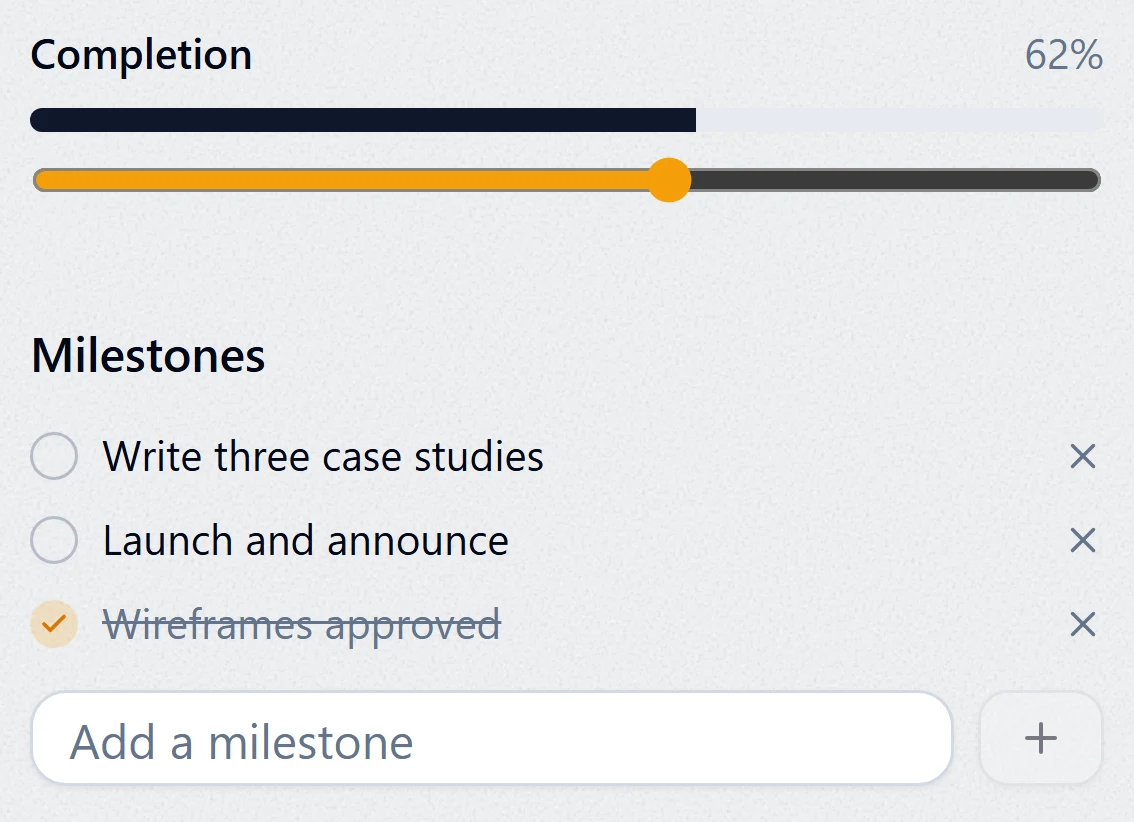
The details that carry it.
Decisions that mattered
- Capture never waitsSaving is instant and works offline; the AI sorting happens afterwards, so the one thing you must do is never slowed down.
- One way to do a thingThe same action looks and behaves the same everywhere, so habits build instead of resetting from screen to screen.
- Onboarding as part of the productTesters arrive with no context, so the welcome, the gradual reveal of sections and the small "What's this?" helpers carry real weight, in plain words rather than the database's.
What I learned
Building for yourself is easy to over-feature. Opening it to people who know nothing about it pushed the work the other way: fewer nouns, fewer screens, and labels a stranger understands.
Something similar in mind?