
Inner Atlas
A private canvas for mapping how your own mind works: the triggers, beliefs, emotions and behaviours you've uncovered through coaching, and the loops they quietly form.
At a glance
- The empty screen is the hardest one
- A bias is both a step and a lens
- Private by default, permanently
The question
Insight from coaching or therapy fades fast. A breakthrough becomes a half-remembered phrase in a notebook, and linear notes lose the very thing that made it useful: how one thought leads to the next. Could a map hold that structure, and show you when a chain closes back on itself?
What I built
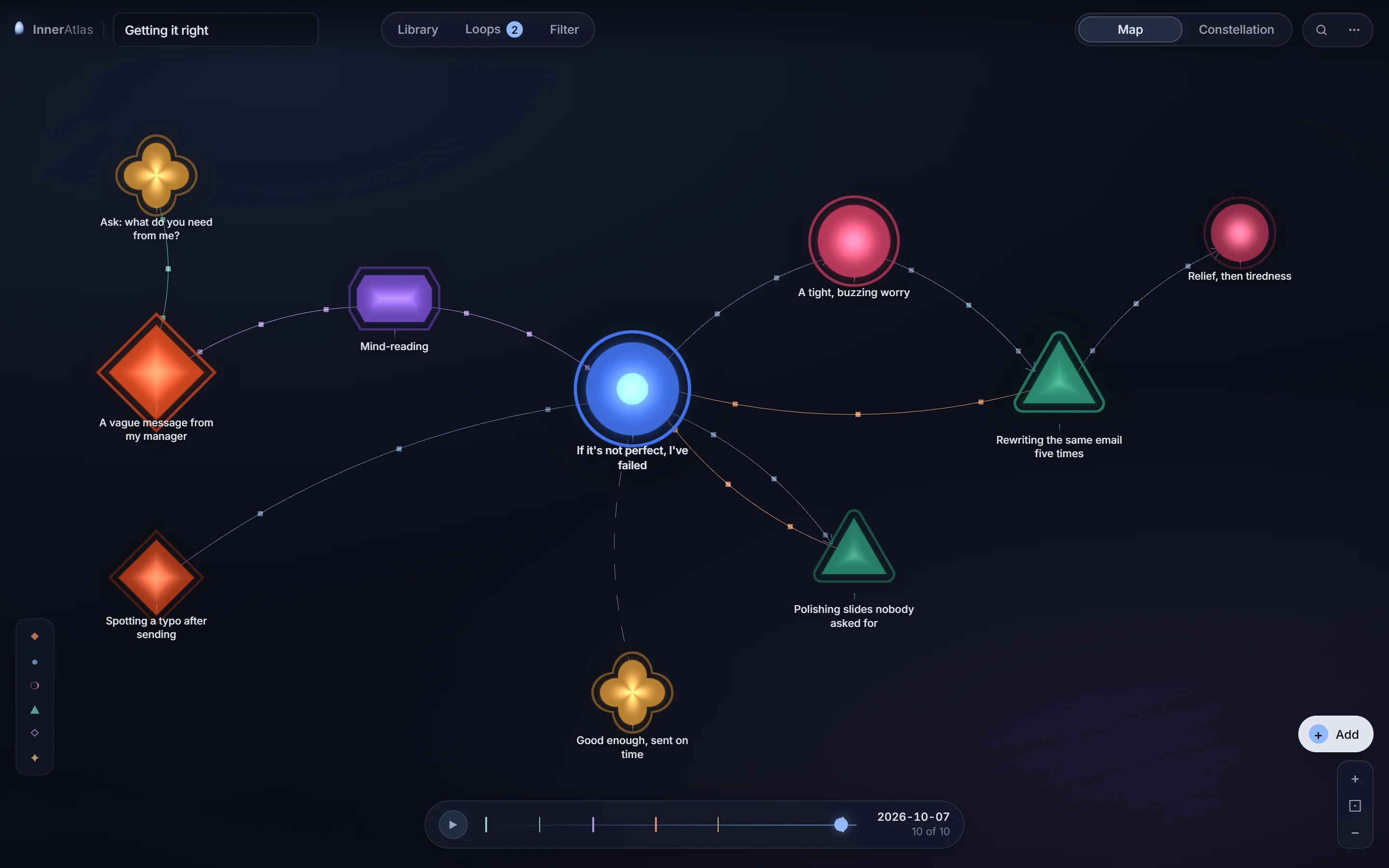
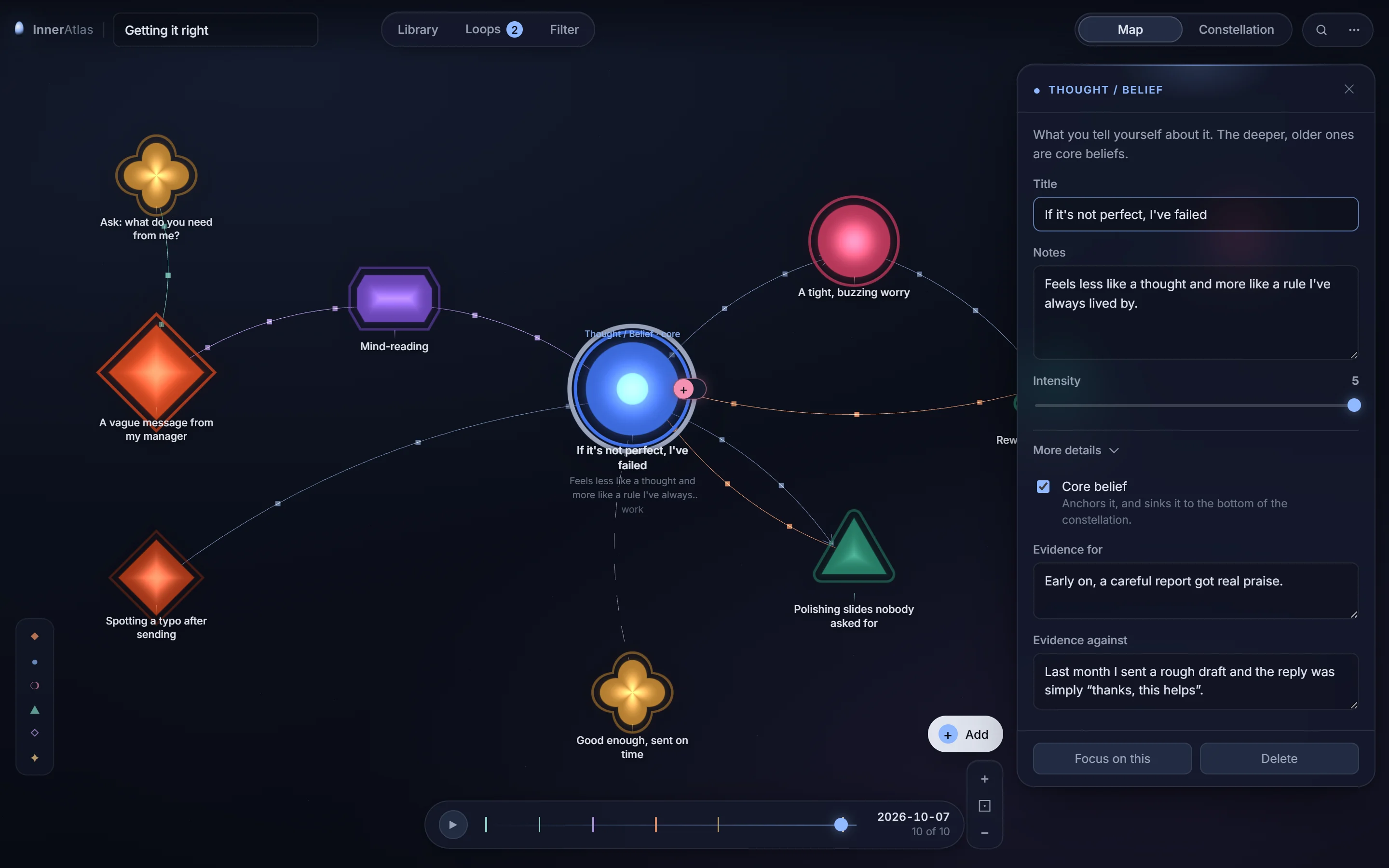
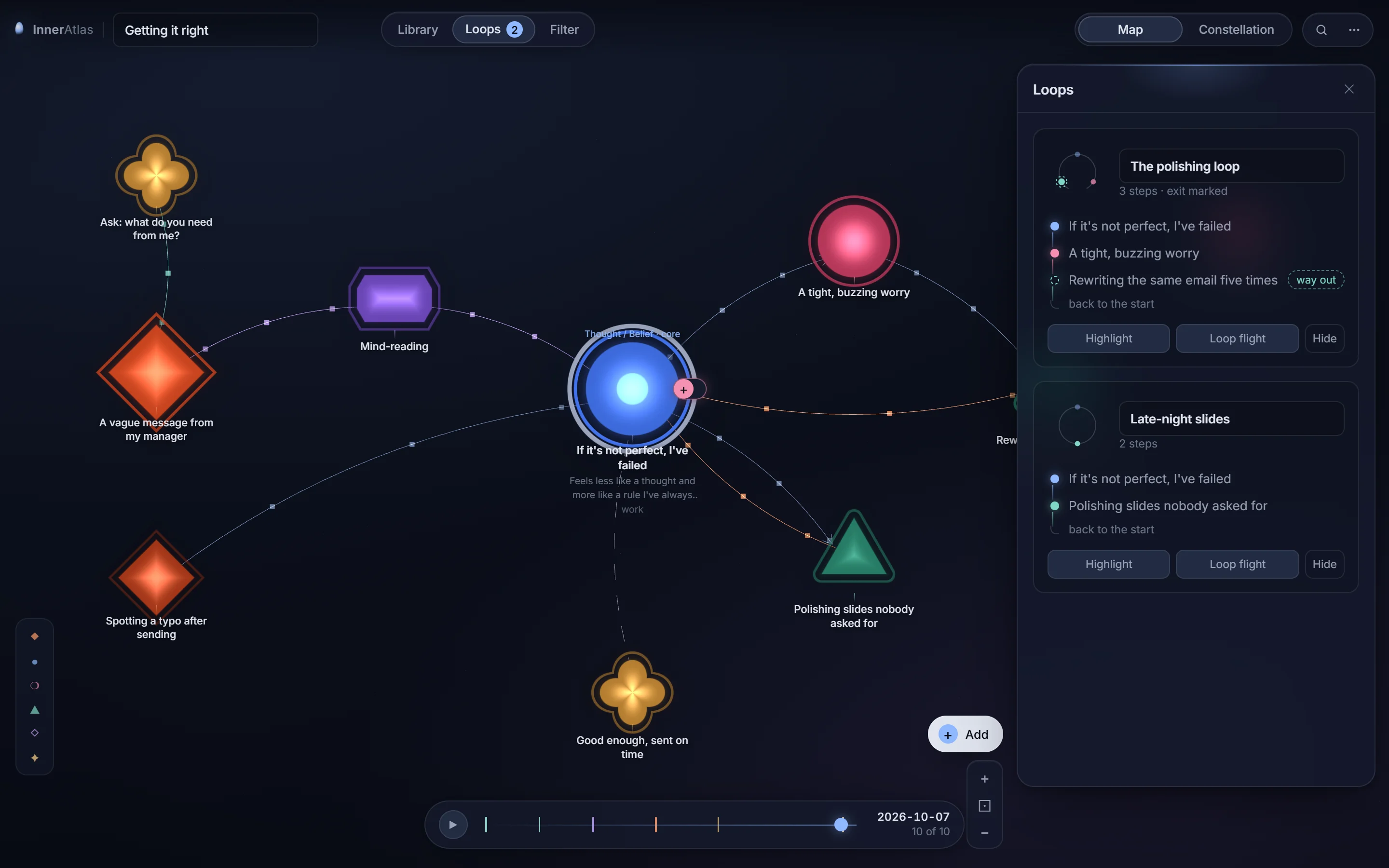
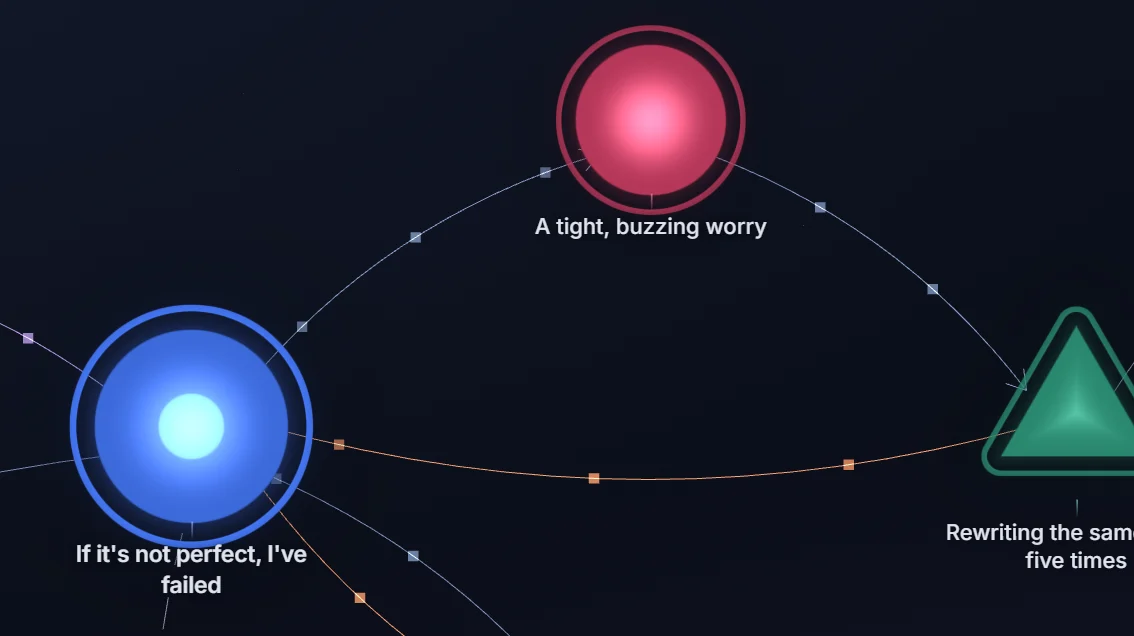
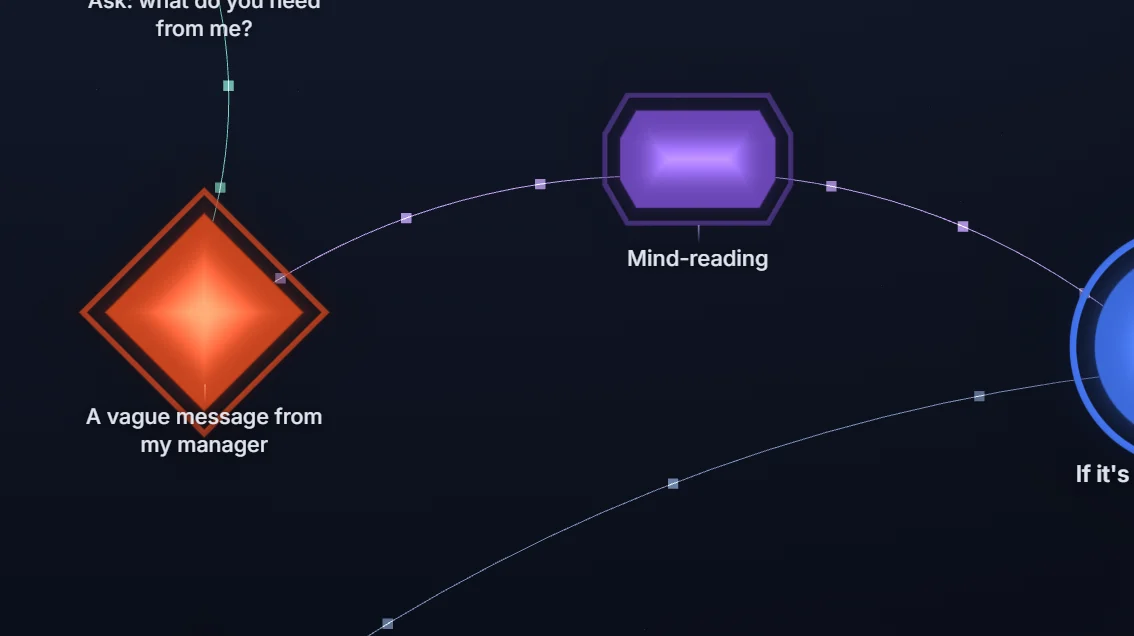
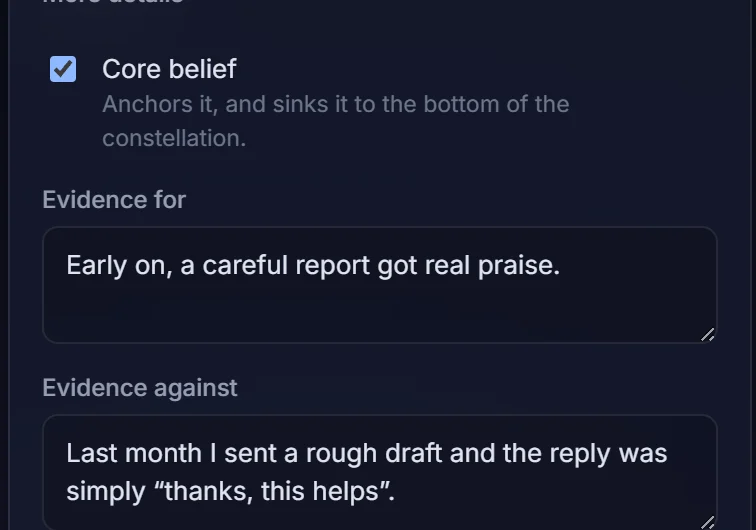
A calm, dark canvas with six kinds of shape: trigger, thought or belief, emotion, behaviour, bias and value. You connect them, and the app finds every loop on its own, so you can name it and mark the step where you could get out.
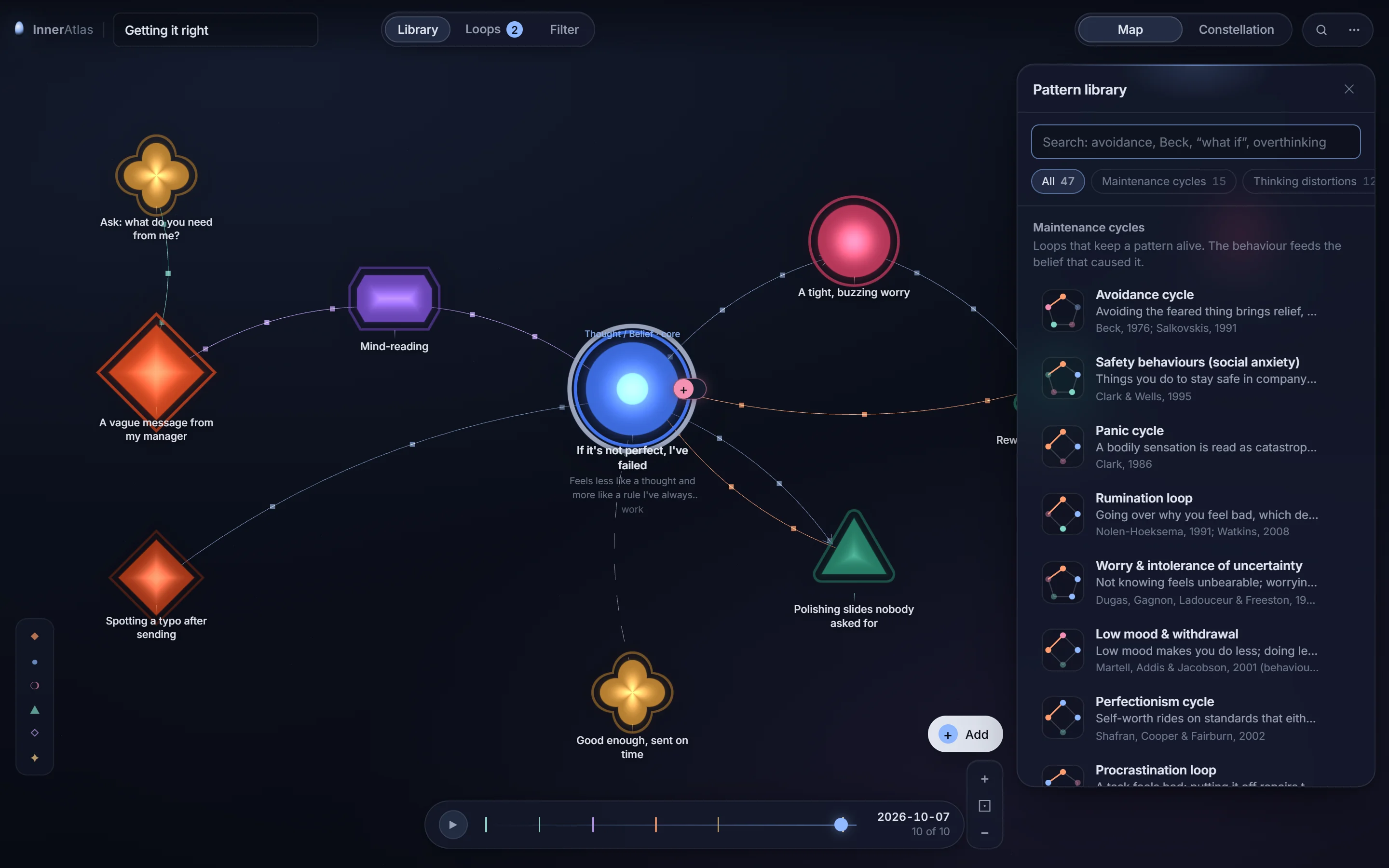
The way in is Map a moment: four plain questions about one recent moment, and the chain draws itself as you answer. A pattern library of 47 documented patterns, each with its source, a timeline that replays how the map grew, and a 3D constellation view sit around that.
Inside
How it looks in use.
- Role
- Sole designer, developer and owner
- Built with
- React, three.js with custom shaders, IndexedDB
- Runs
- In the browser, local-first, no account
- Status
- Released, early
Up close
The details that carry it.
Decisions that mattered
- The empty screen is the hardest oneA blank canvas is intimidating when the subject is yourself, so the first thing you see is a question, not a tool.
- A bias is both a step and a lensMind-reading can sit in a chain like any other node, or be dropped onto a connection, where it visibly bends what passes through it.
- Private by default, permanentlyEverything lives in the browser's own storage. No account, no network calls, and export to JSON, an image or a written summary when you want it.
What I learned
The useful question was the last one: did doing that make the thought feel more true? Asking it in plain words turns a list of reactions into a loop you can actually see, and that one moment does more than any feature around it.
Something similar in mind?