
Studio
The tool I run my design practice on, from the first enquiry to the handover. Proposals are presented live in the meeting, and the client gets their own page to follow along.
At a glance
- The process is data, not code
- One thing at a time
- The client page is an echo, not the main act
The question
Project tools are built for tracking tasks, not for running a design engagement. What would a workspace look like if it followed the actual process: understand the problem first, price the outcome, present the options in person, then deliver and hand over cleanly?
What I built
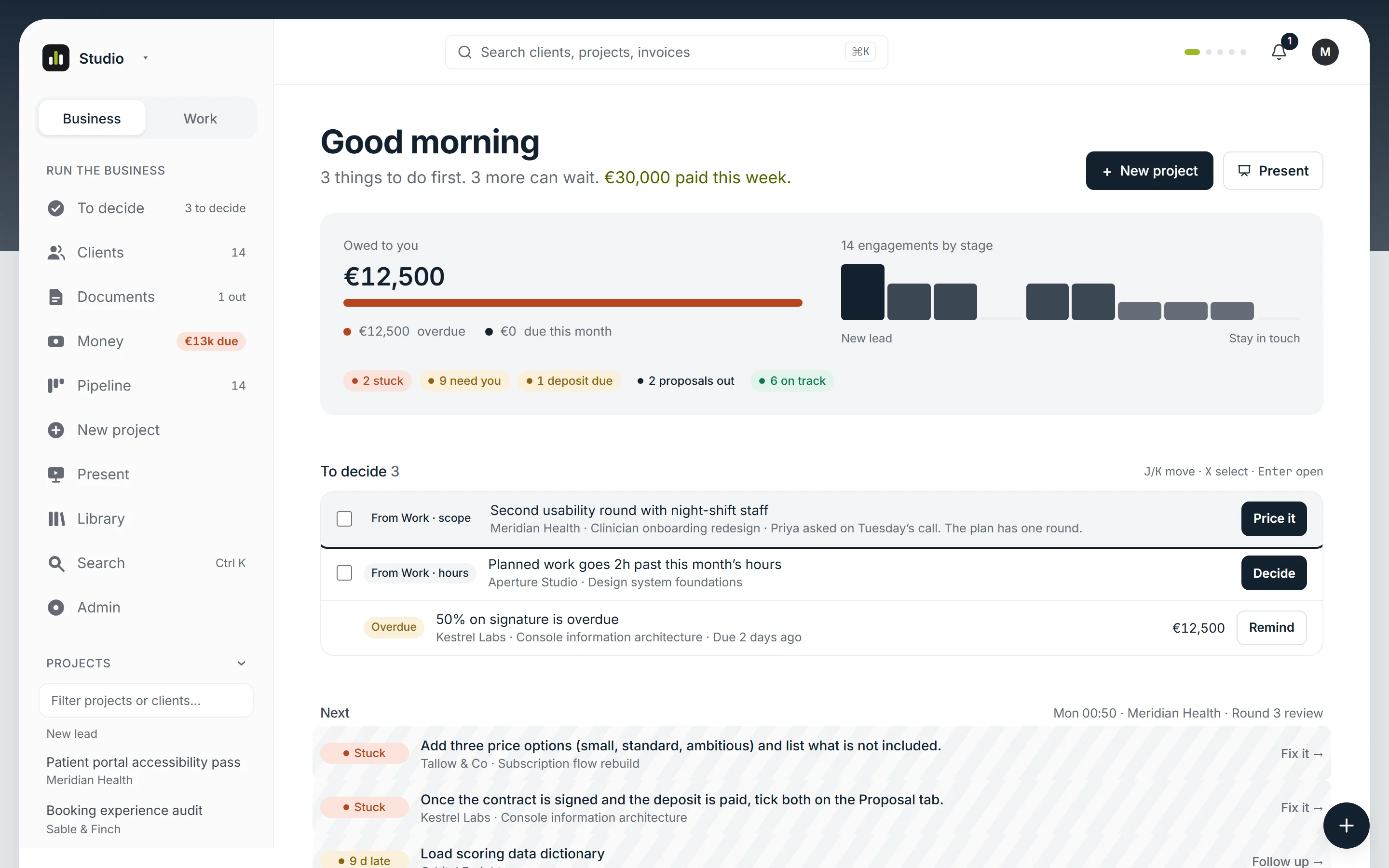
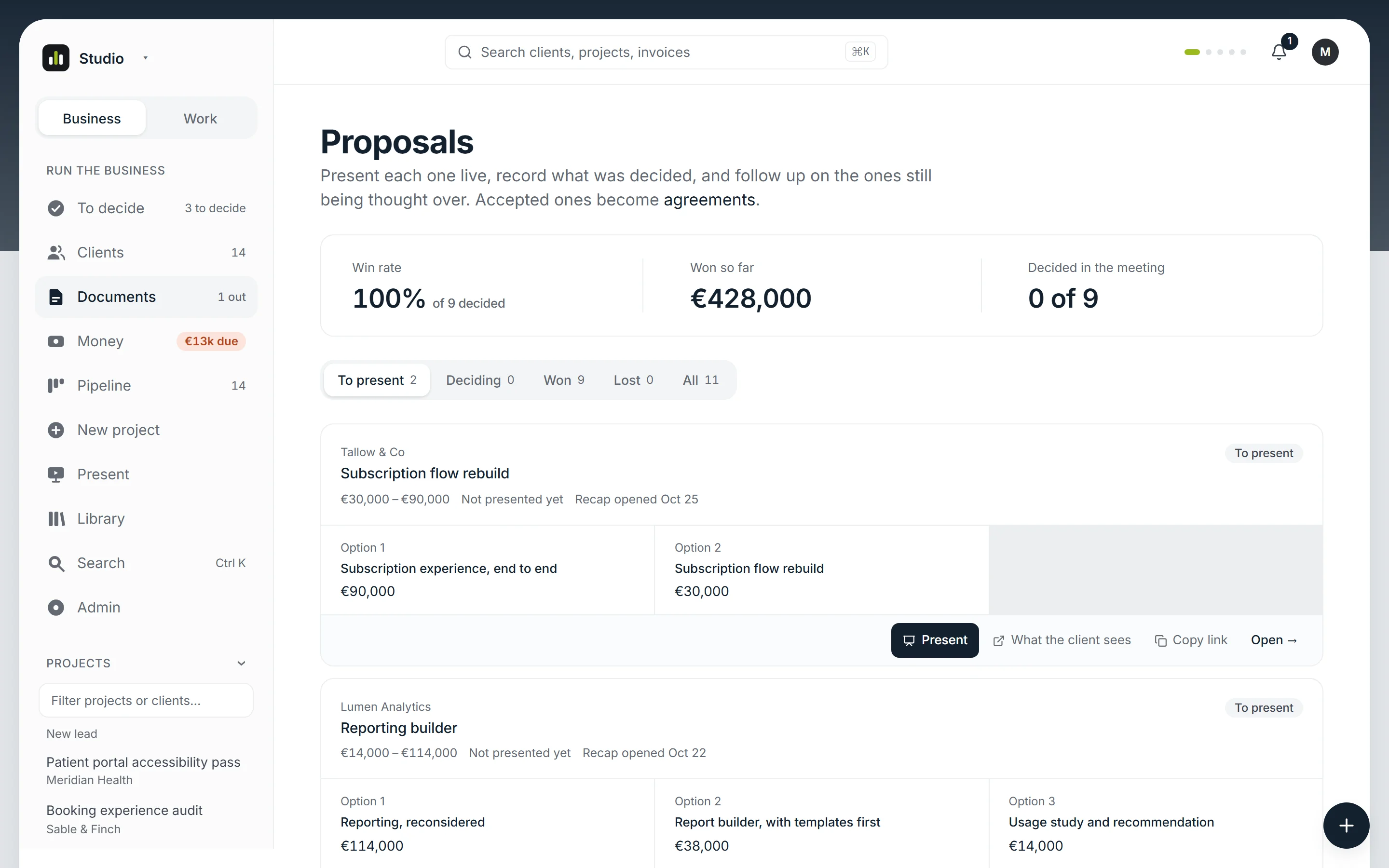
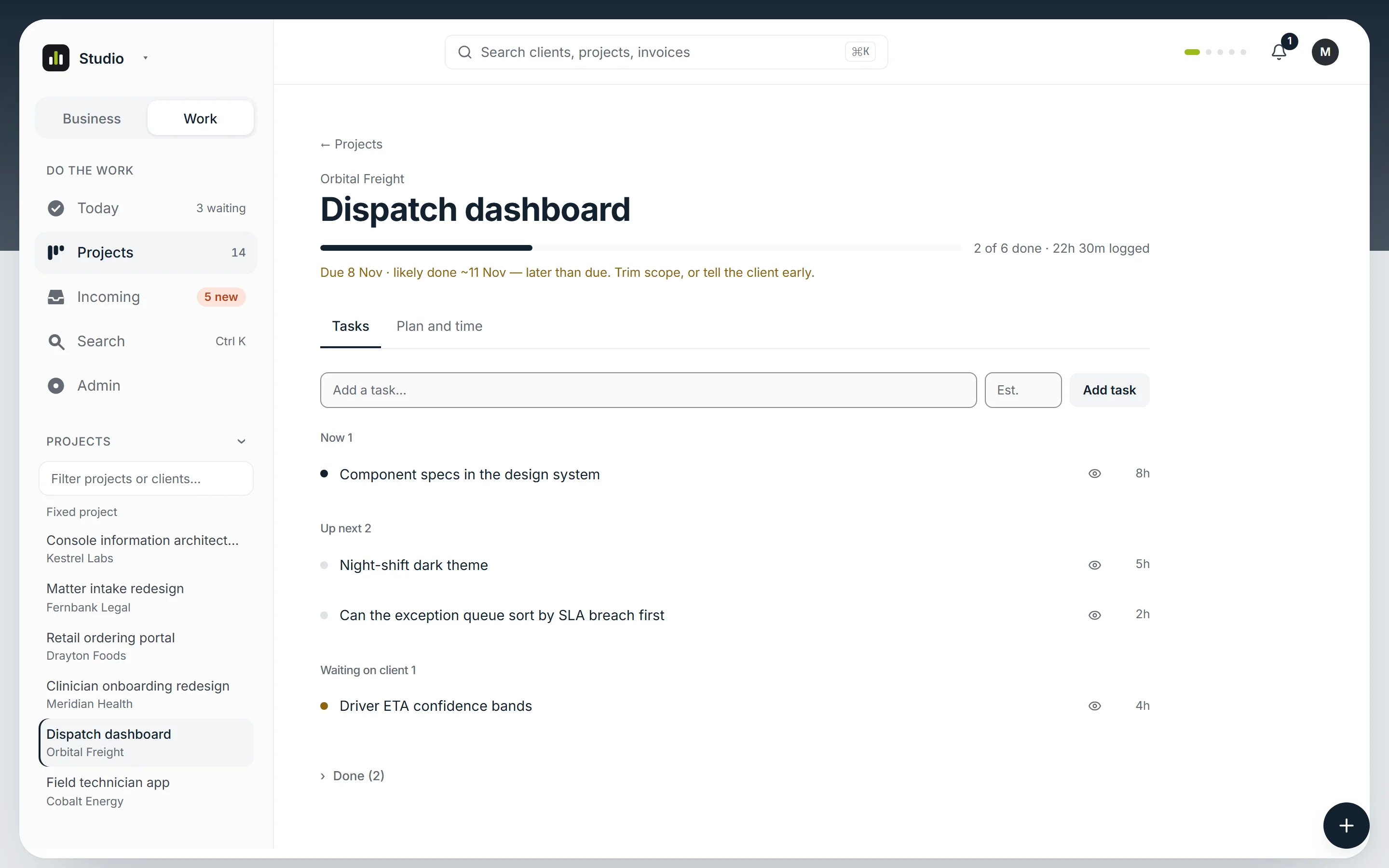
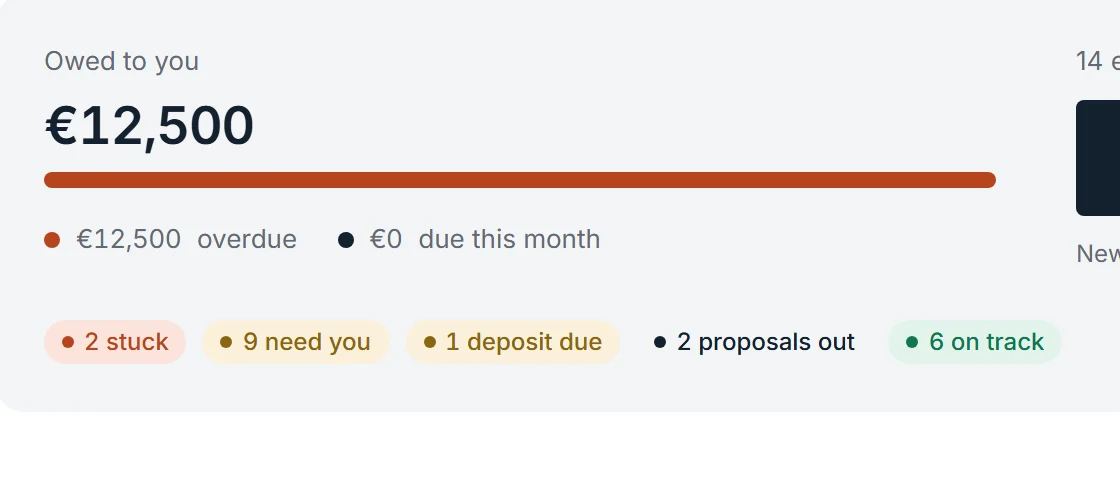
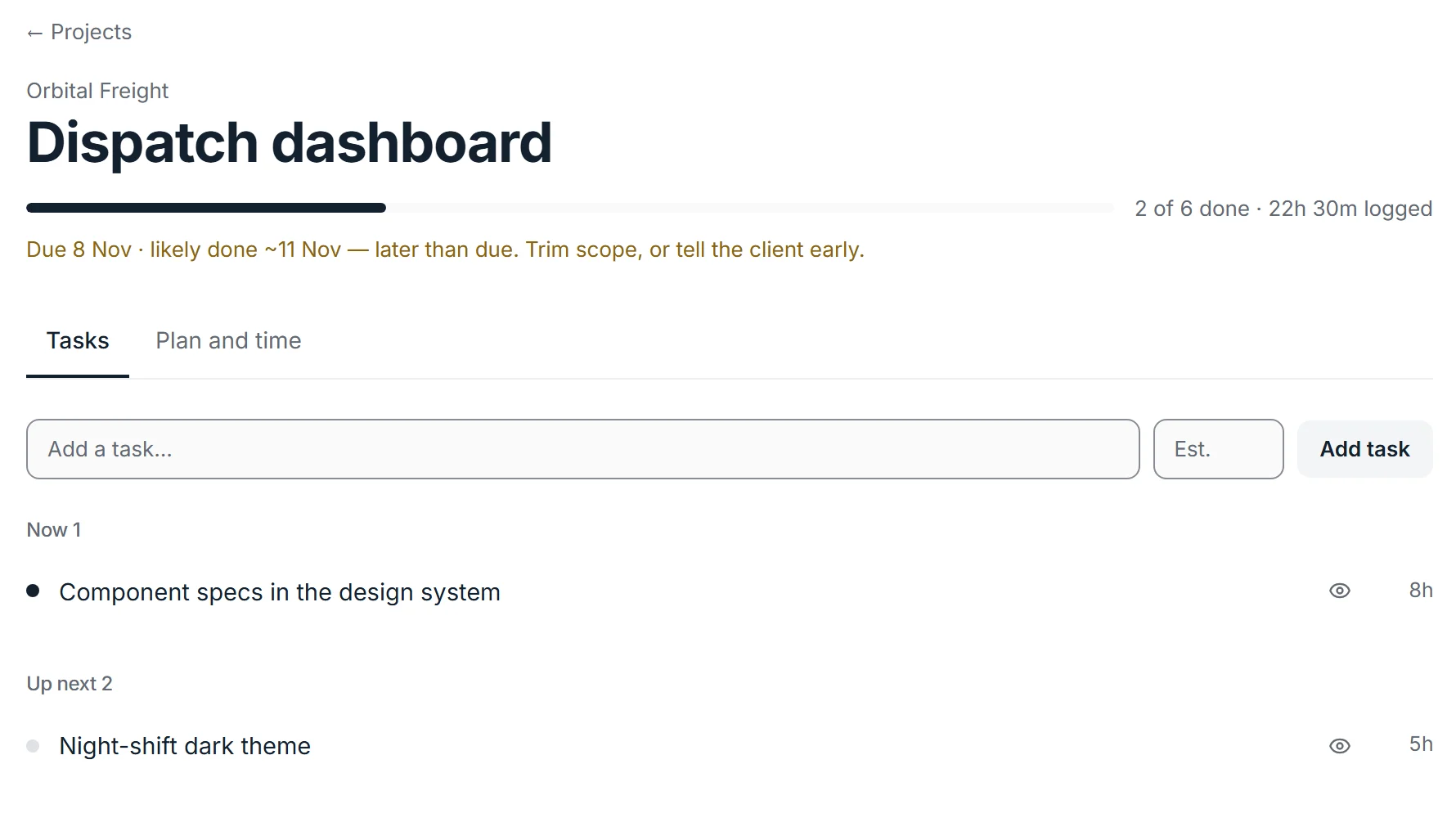
A single-operator workspace with two modes. Business holds leads, proposals, clients, agreements and money, and opens on a short list of the few things that need a decision today. Work is for delivery: projects, tasks, time against estimates and a forecast of when the work will likely be done.
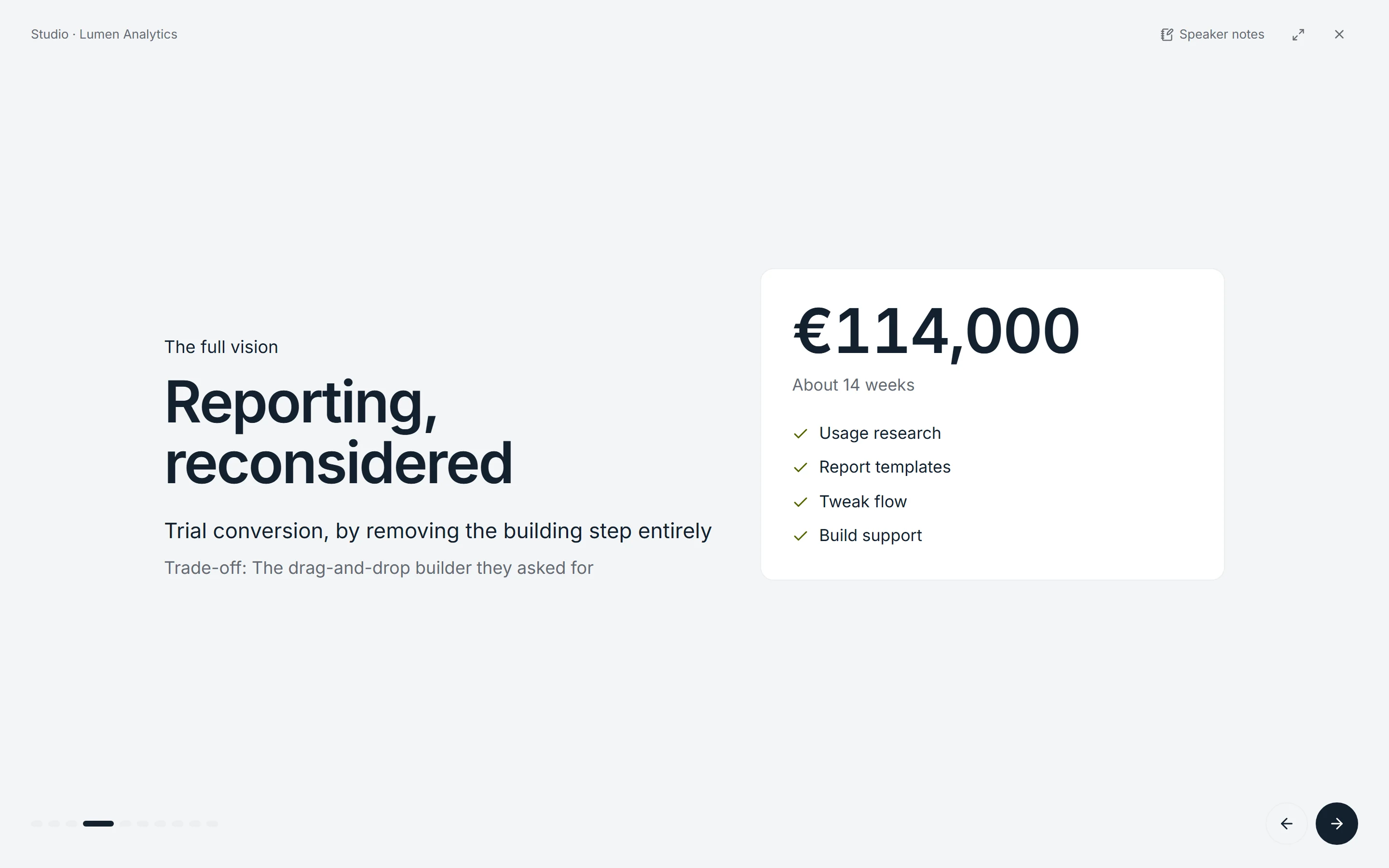
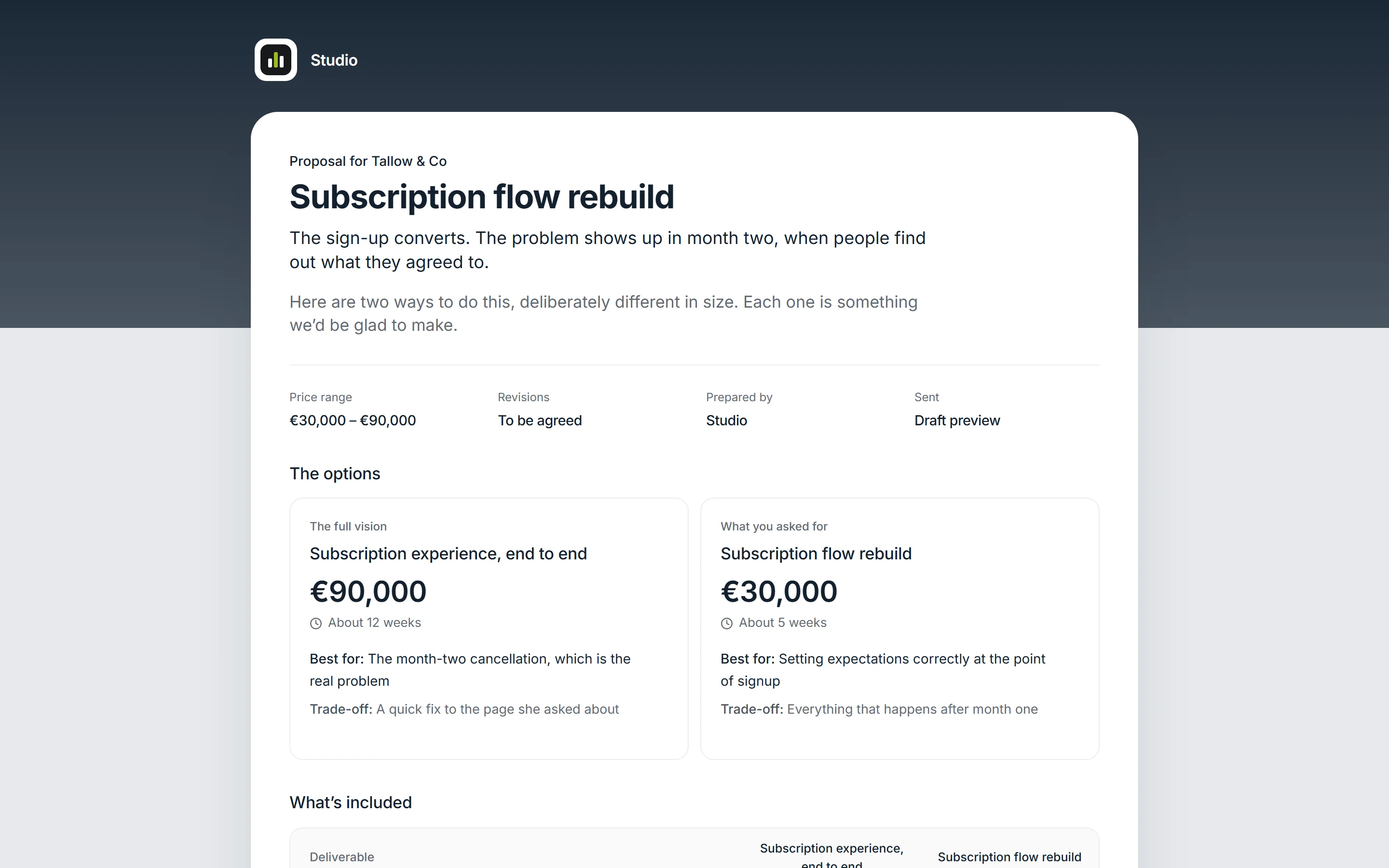
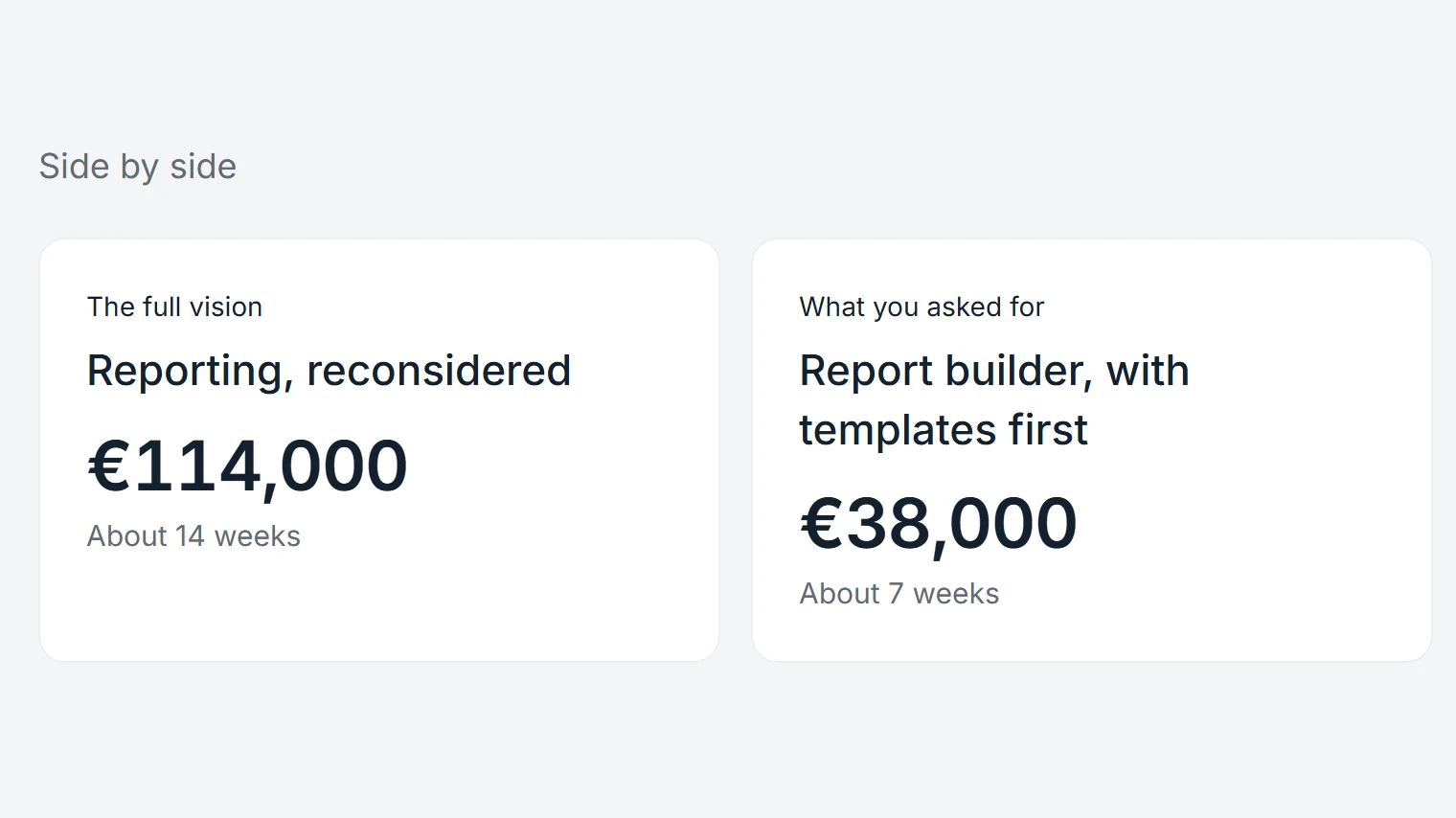
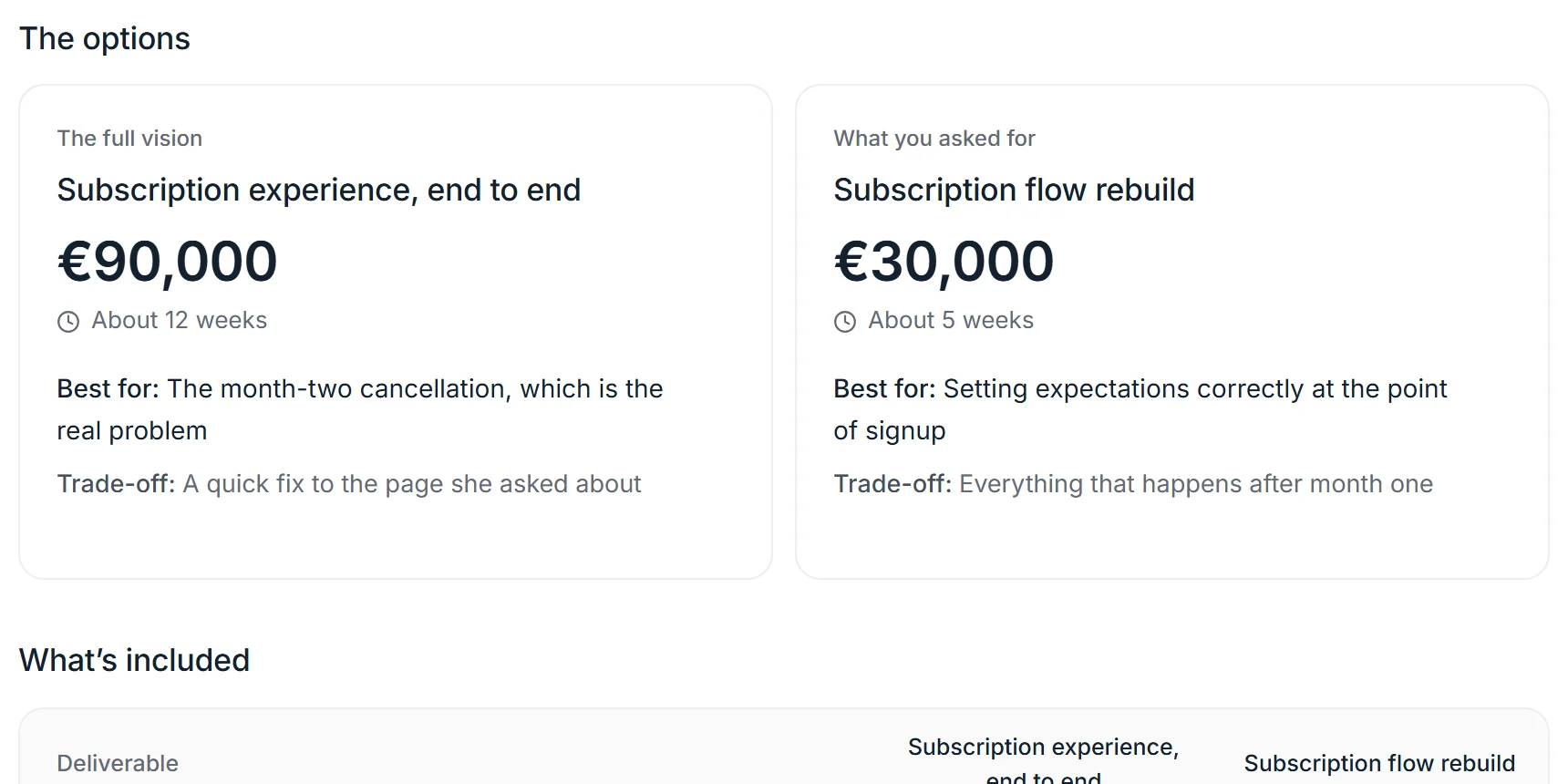
Every proposal can be presented as a full-screen deck in the meeting, with two or three deliberately different options side by side. The same proposal lives on a private client page, where the client can see progress, choose an option, sign the agreement and approve rounds without an account.
Inside
How it looks in use.
- Role
- Sole designer, developer and owner
- Built with
- Next.js, Drizzle, Postgres
- Runs
- On my own server, behind a sign-in
- Status
- In beta testing
Up close
The details that carry it.
Decisions that mattered
- The process is data, not codeStages, gates and warnings live in one config file and are checked on the server at every save, so making the process stricter or looser is an edit, not a rewrite.
- One thing at a timeThe first version showed everything and felt intimidating. The overview now leads with the next decision in plain words, with the details one tap away.
- The client page is an echo, not the main actProposals are made to be talked through in the room. The link the client gets afterwards repeats what was shown, and choosing online is optional.
What I learned
Building a tool for my own work forced me to name my process. Every rule I wrote into the config was a habit I had to decide I really believed in.
Something similar in mind?