
The Validation Loop
A free workbook for finding out if an idea is real before you build it: name the problem, find the belief that could sink you, and decide what would prove you wrong before you test.
At a glance
- The bar is a sentence, not a form
- Count against what you wrote, not what you hope
- One part at a time
- Nudges, not grades, and no AI
- Private by default
The question
Founders test an idea, then decide what the results mean, and by then hope has quietly moved the bar. My talk on validating ideas ends with a loop: believe, test, count, decide, every week. Could a small tool make that loop something you actually do, rather than a slide you nod along to?
What I built
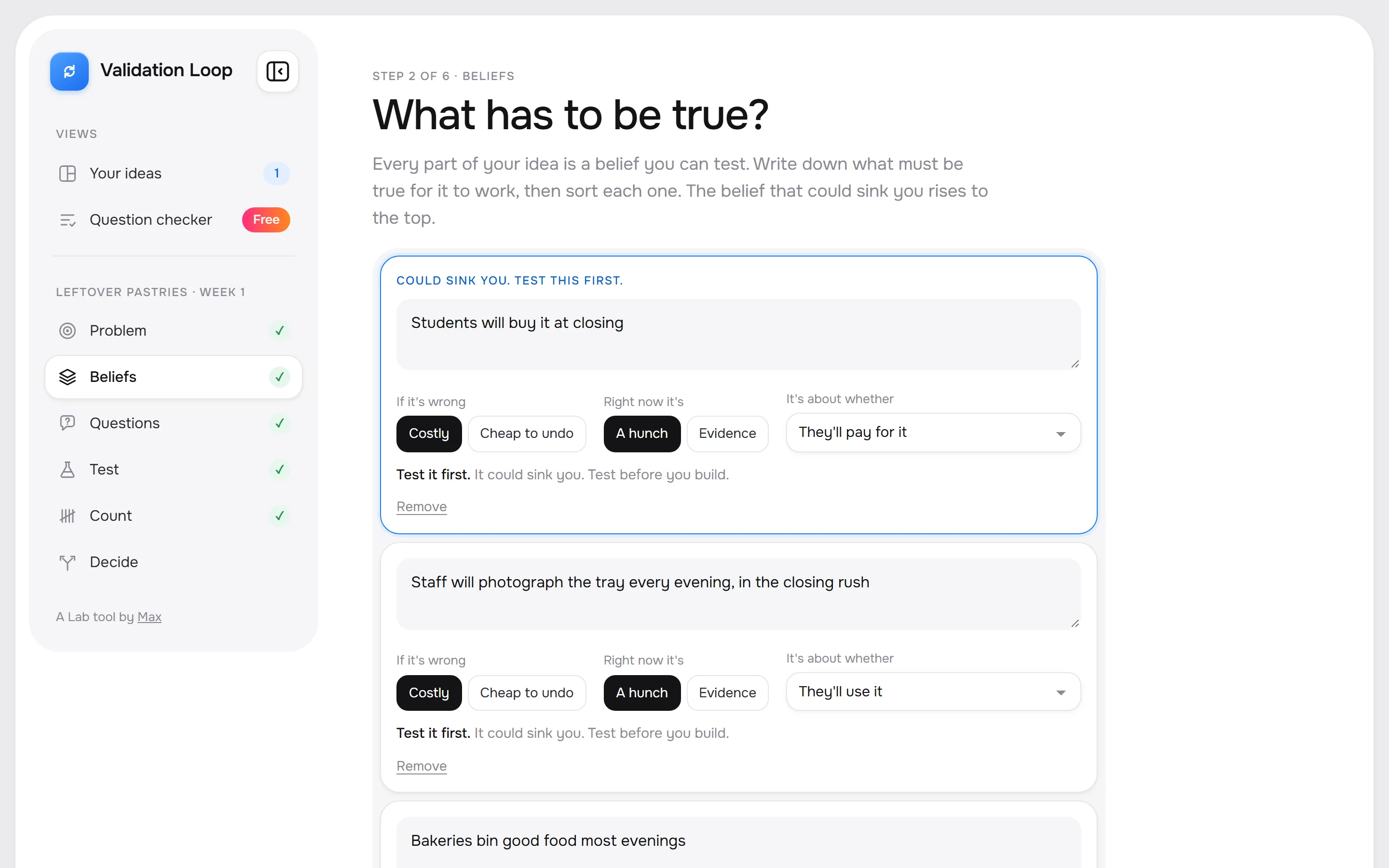
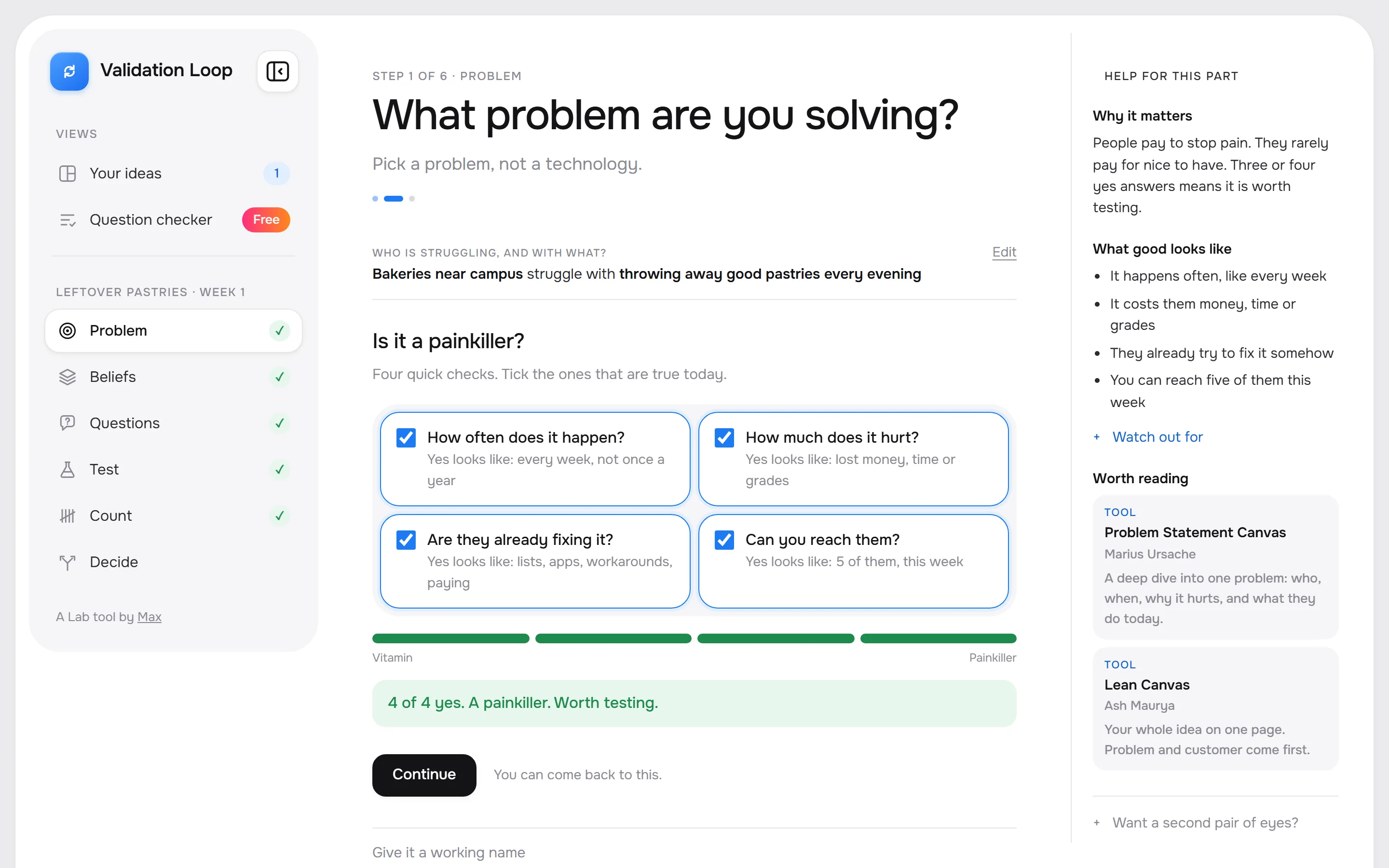
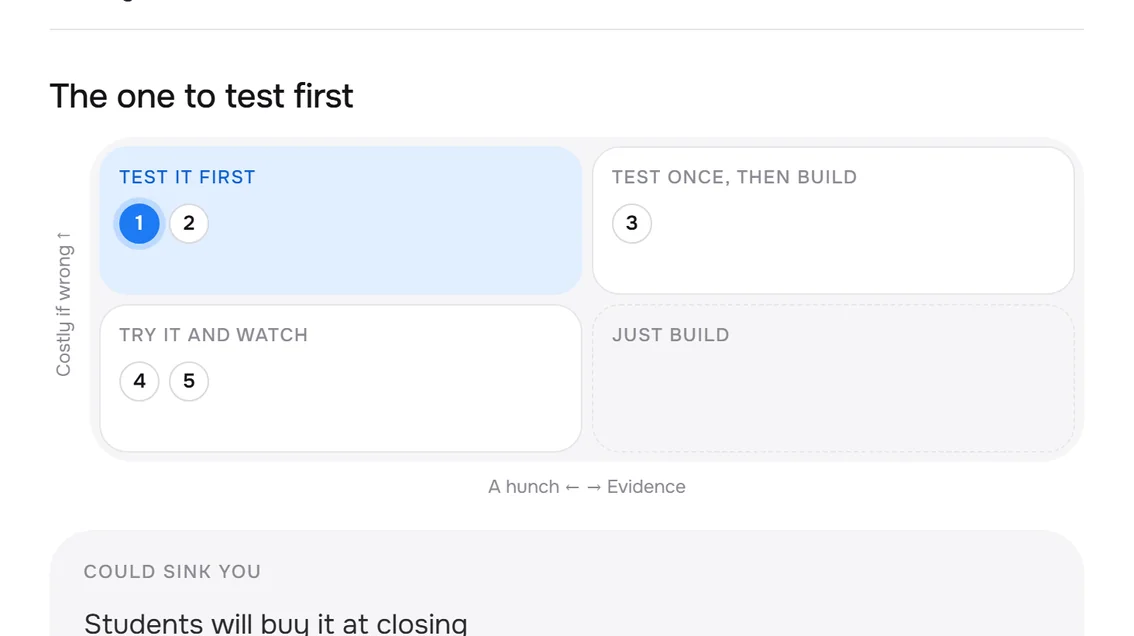
A workbook in six steps that follows the talk. Problem: who is struggling, with what, and why, plus a four-question painkiller check. Beliefs: what has to be true, each sorted by how costly it is if wrong and whether it's a hunch or evidence, so the one that could sink you rises to the top. Questions: interview questions, checked for the wording that invites polite answers.
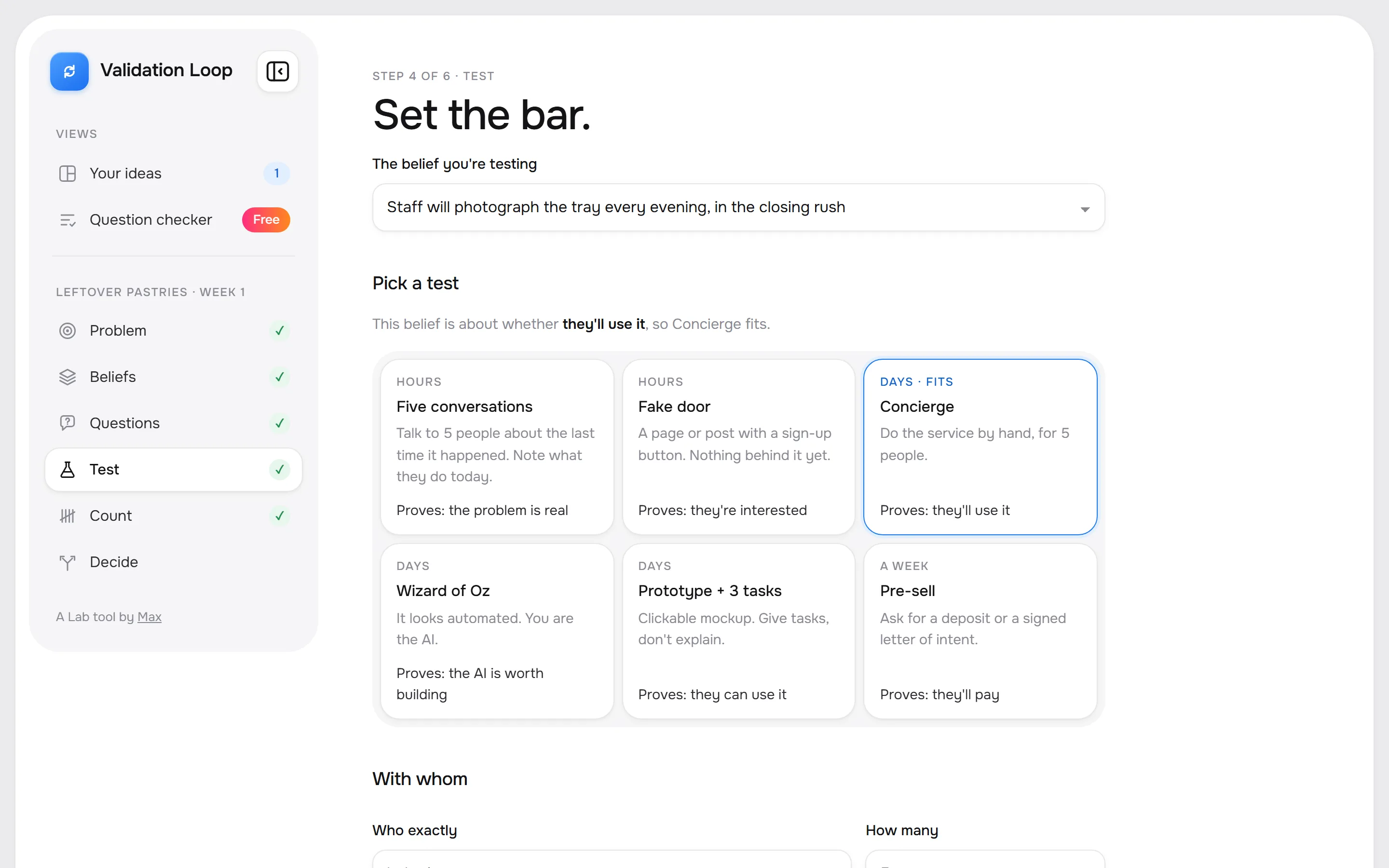
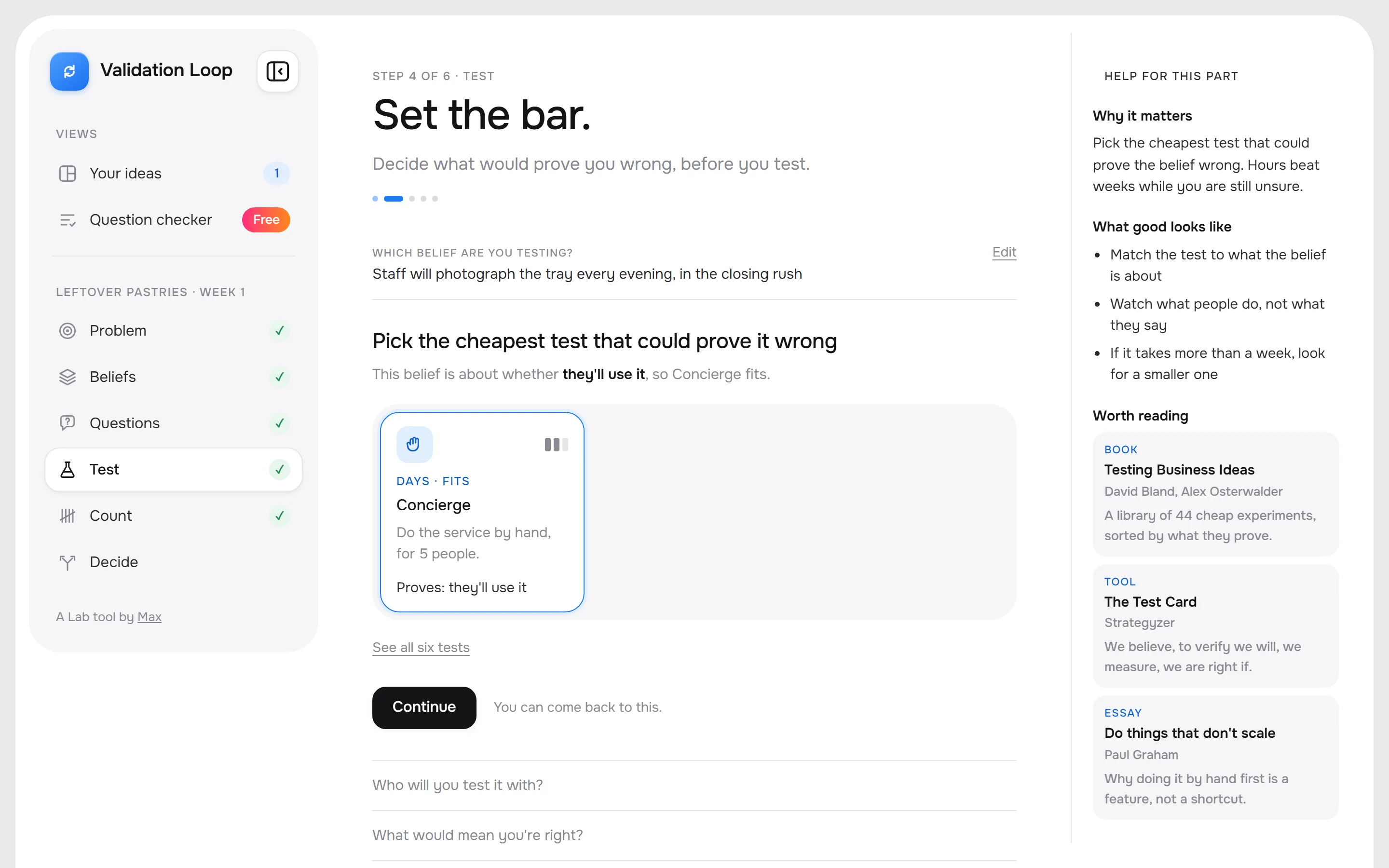
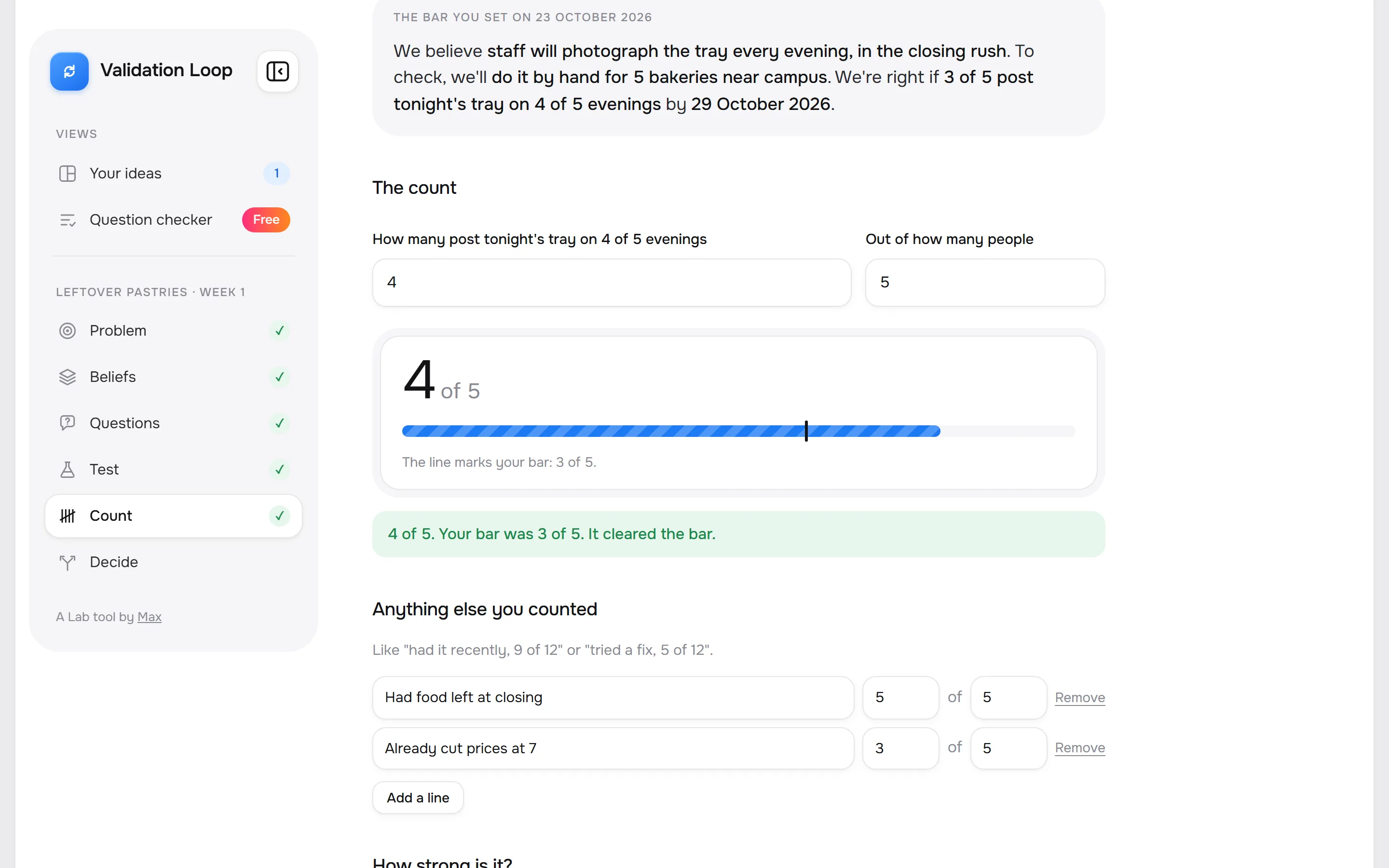
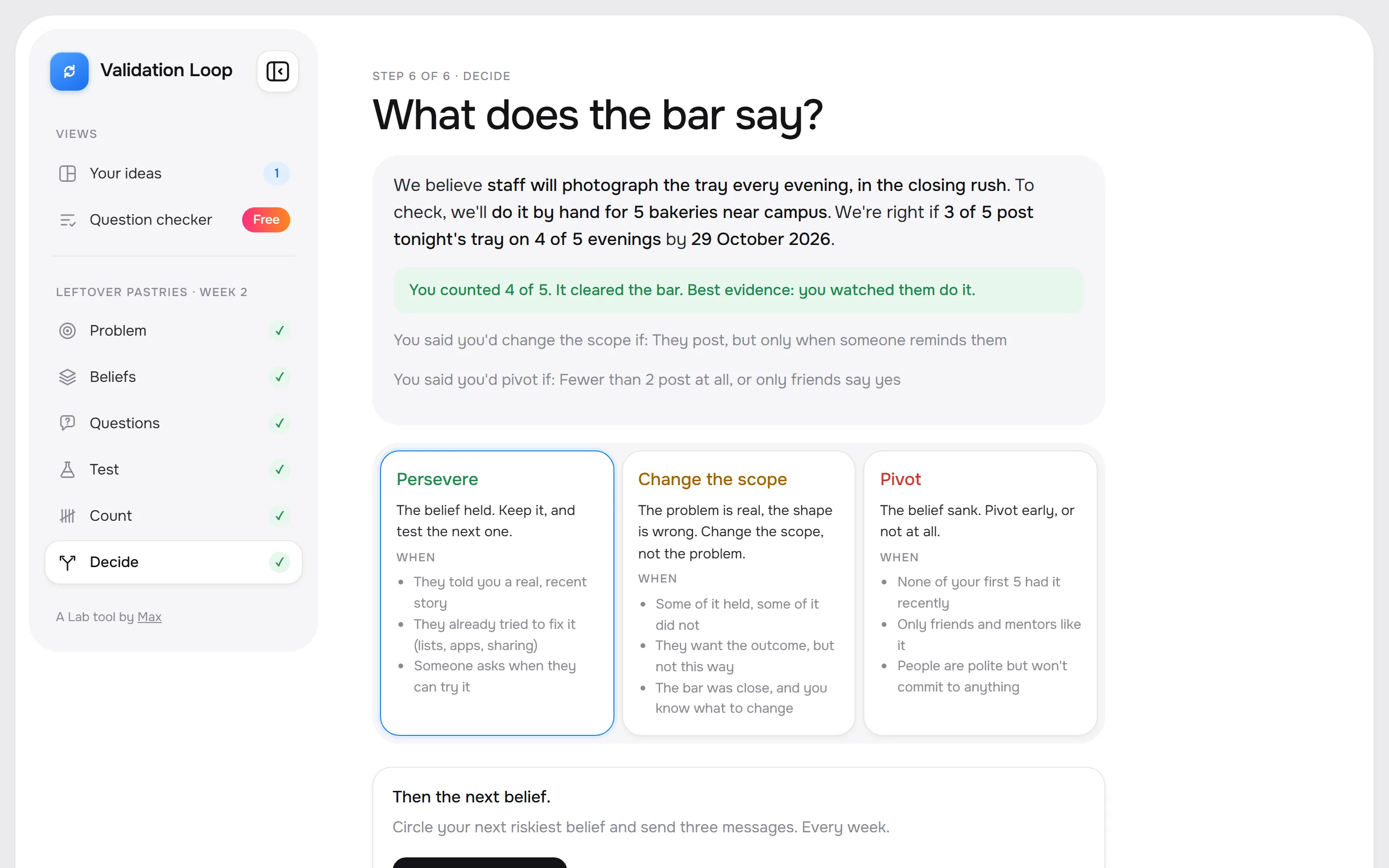
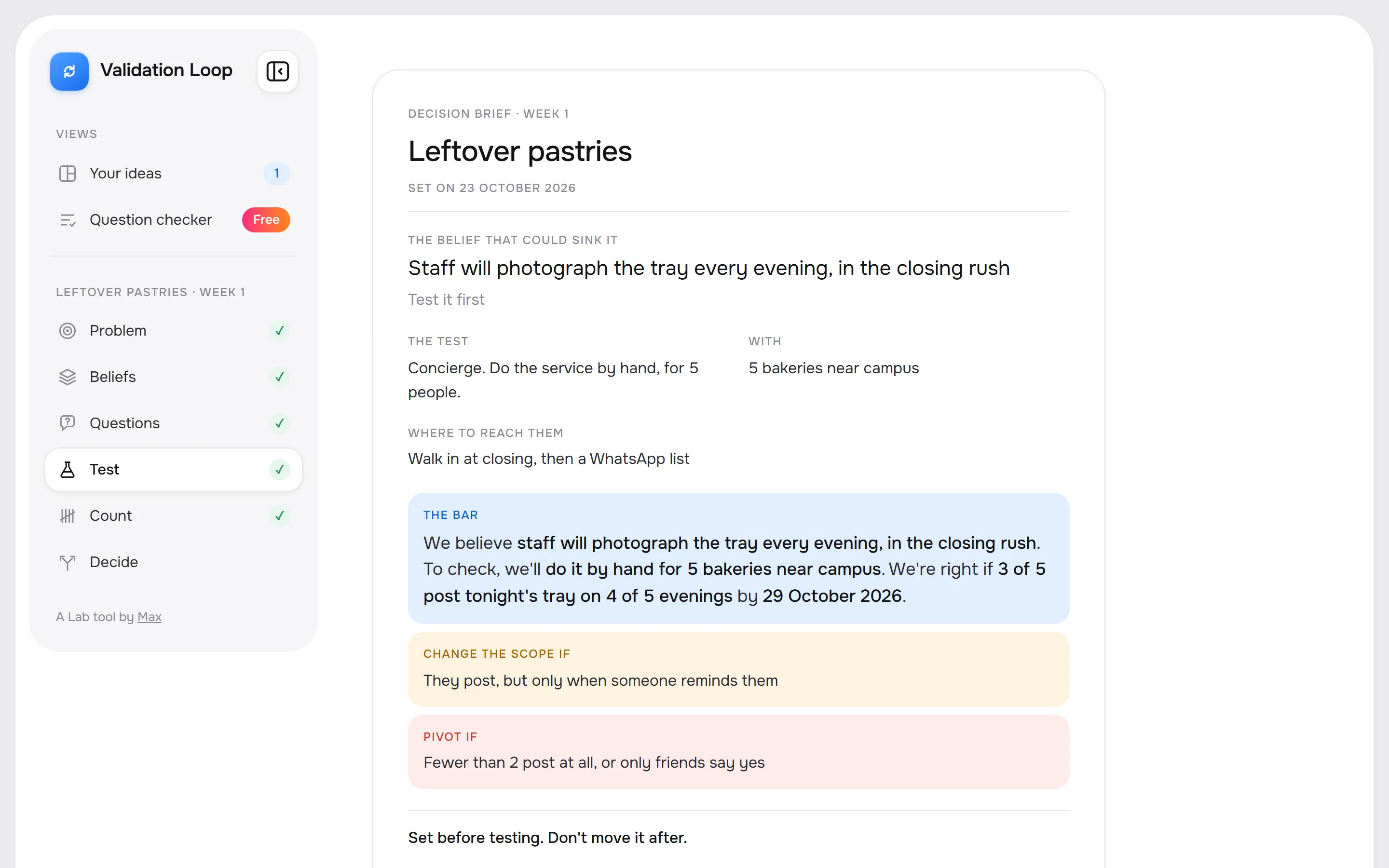
Test: a test picked from a short menu that matches the risk, written as one sentence with a number and a date. Count: what people did, held against that number. Decide: persevere, change the scope or pivot, then the next belief.
It started as The Bar, a single page for the test step, and grew into the loop once it was clear the bar only means something next to the steps around it.
Inside
How it looks in use.
- Role
- Sole designer, developer and owner
- Built with
- Plain HTML, CSS and JavaScript, no build step
- Runs
- In the browser, no account, saved on your device
- Status
- Released, early
Up close
The details that carry it.
Decisions that mattered
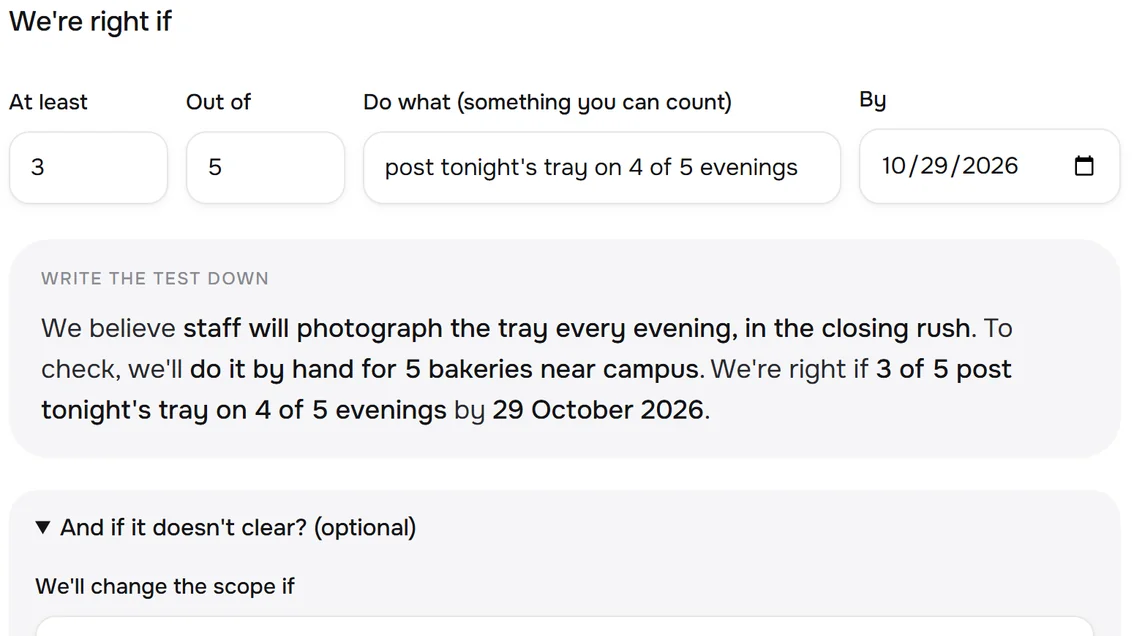
- The bar is a sentence, not a form"We're right if 3 of 5 do this by Thursday" is something you can say to a co-founder and check later. Vague words like "interest" or "positive feedback" get a gentle nudge.
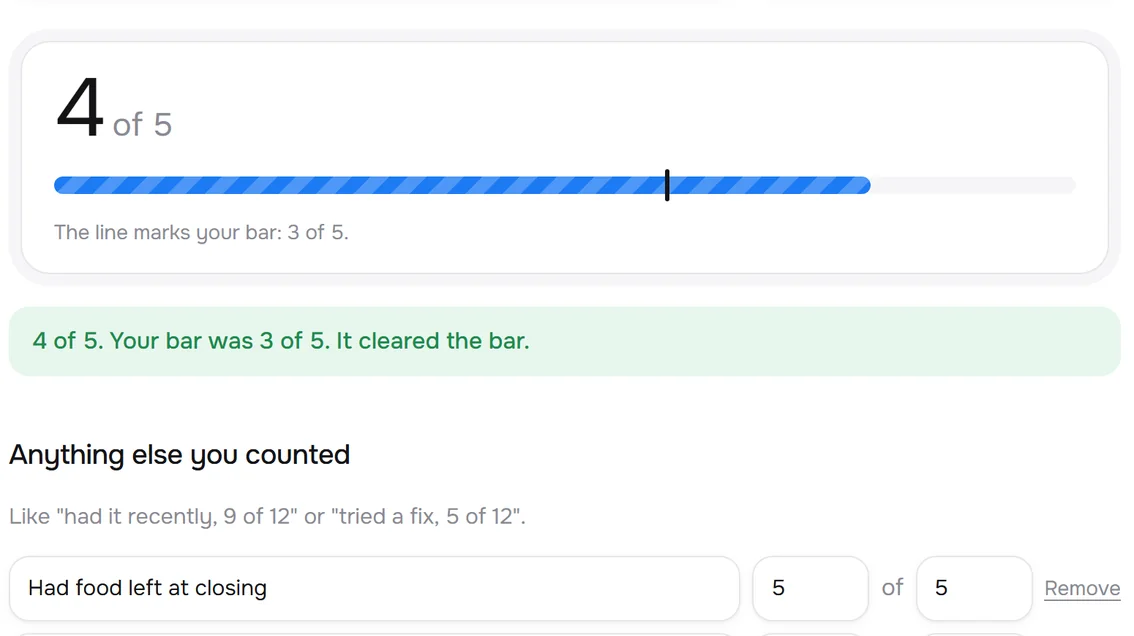
- Count against what you wrote, not what you hopeThe count shows as one big number with a marker where the bar sits, so it either clears it or it doesn't.
- One part at a timeEach step opens one small part, and finished parts fold into a single line you can reopen. Help, examples and further reading wait in a quiet rail beside it, for when you want them.
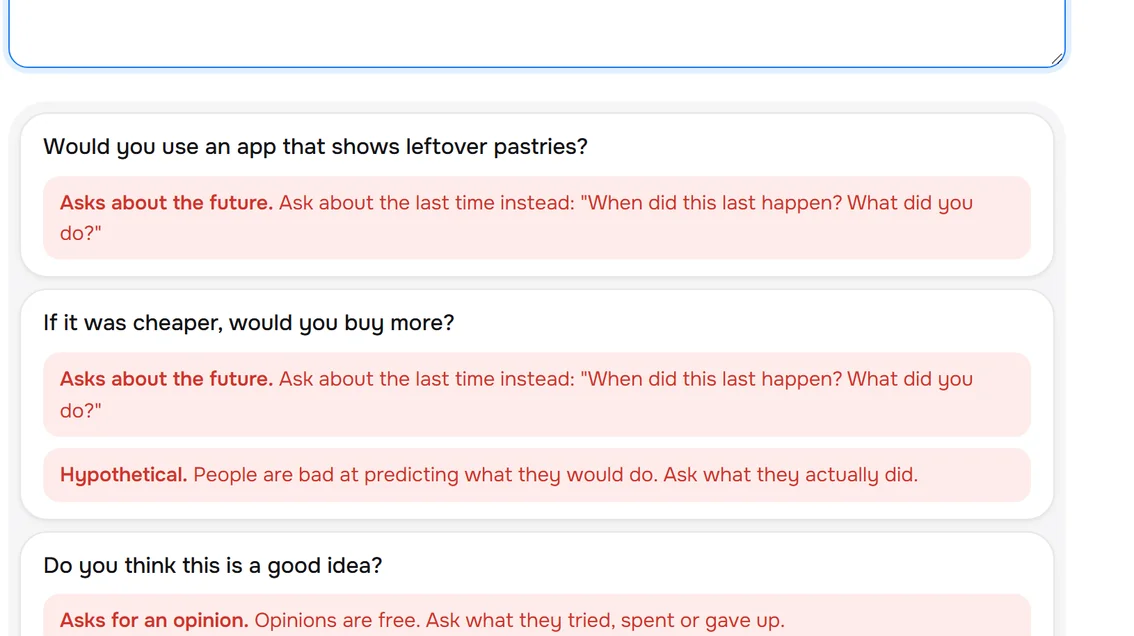
- Nudges, not grades, and no AIPlain word lists flag questions about the future or opinions. Behaviour beats opinion, and AI is an opinion too.
- Private by defaultEverything stays in the browser. A shared bar travels inside the link itself and never reaches a server.
What I learned
The hardest part isn't the test, it's choosing which belief to test. Putting the sorting before the bar did more for the honesty of the result than any feature after it.
Something similar in mind?